- How long
- 1 day
- Best time
- April–October
- Nearest station
- Jiexiu / Jiexiu East
- Entry
- 110 CNY high season, 90 CNY otherwise
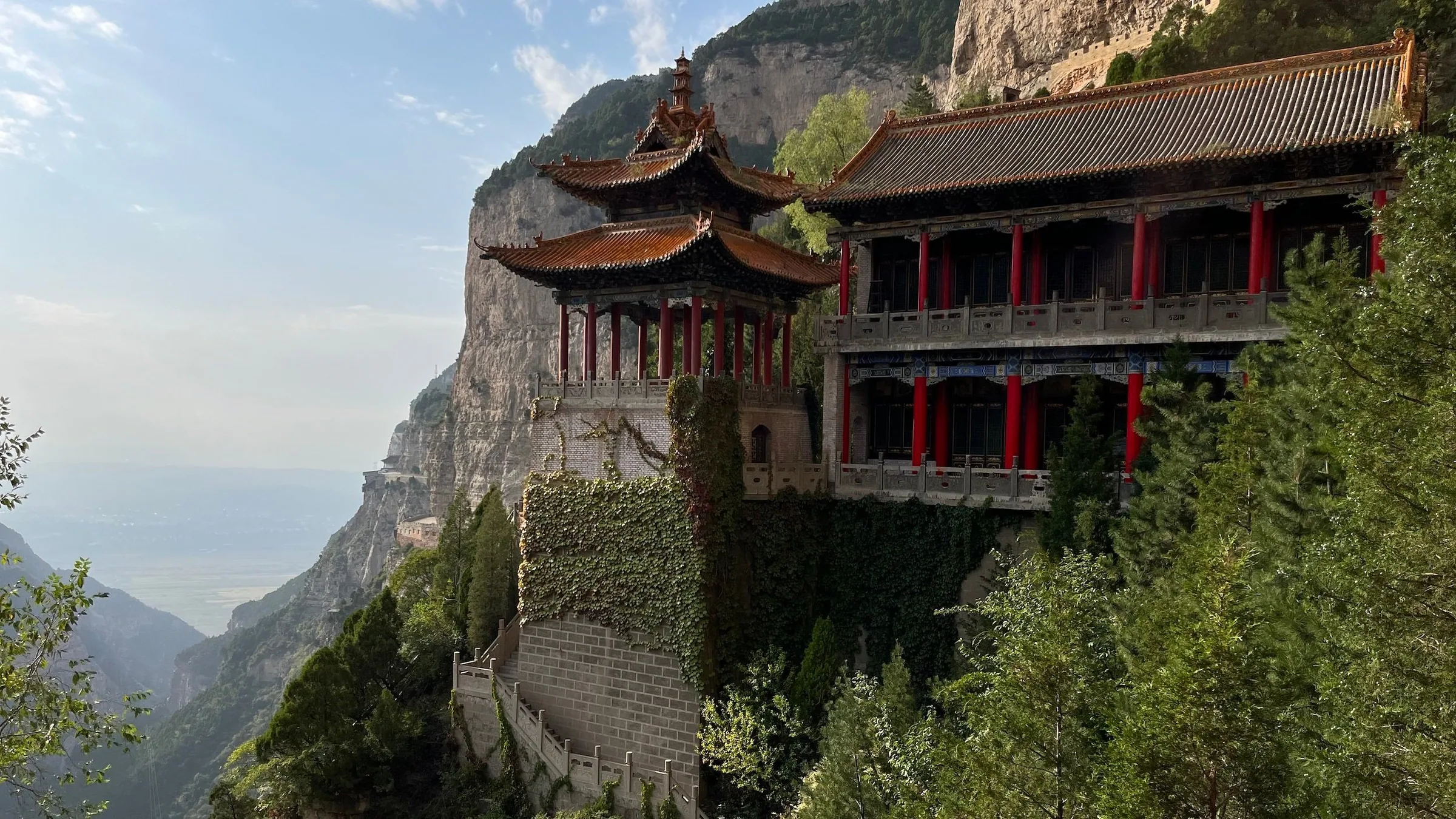
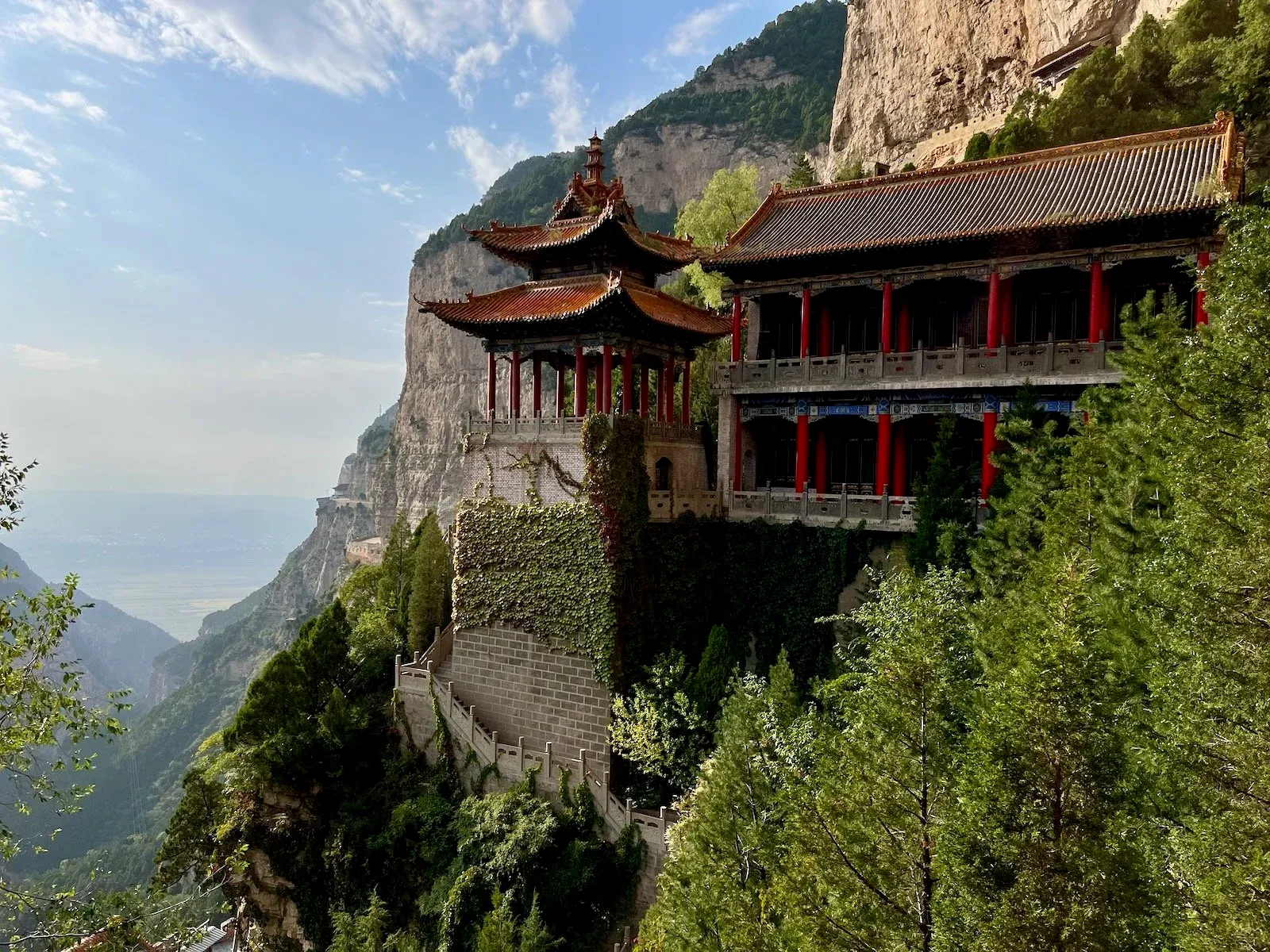
In the remote reaches of China's Shanxi province lies Mianshan (also known as Mount Mian, Mian Shan or Mianshan Scenic Area), a national 5A-level scenic spot and one of the most famous landmarks in China.
With ancient Taoist temples clinging to rugged cliffsides, tombs, mummified monks, tales and myths, Mianshan deserves its place on any list of China's top landmarks.
“The tridimensionality of the figures and the brightness of the colours bring these stories to life in what was, for us, the most impressive temple of the Mianshan region.”
What to see
 STOP 1
Dragon Head Temple
The Dragon Head Temple (Longtou Si) is the first temple you will see when entering Mount Mian, at the first bus stop. We recommend a short stop to explore it and pick up souvenirs and snacks from the shops nearby before venturing deeper into the scenic area.
The bus passes every 10–15 minutes, so you can hop off, explore any of the temples scattered across the mountain, and hop on the next one.
 STOP 2
Qixian Valley
We recommend hopping off at the second Qixian Valley bus stop and doing the trail up to the top of the mountain. This avoids the morning crowds at the most famous spots, like the Sky Plank Road and Sky Bridge, which are best explored in the afternoon when most group tours have left.
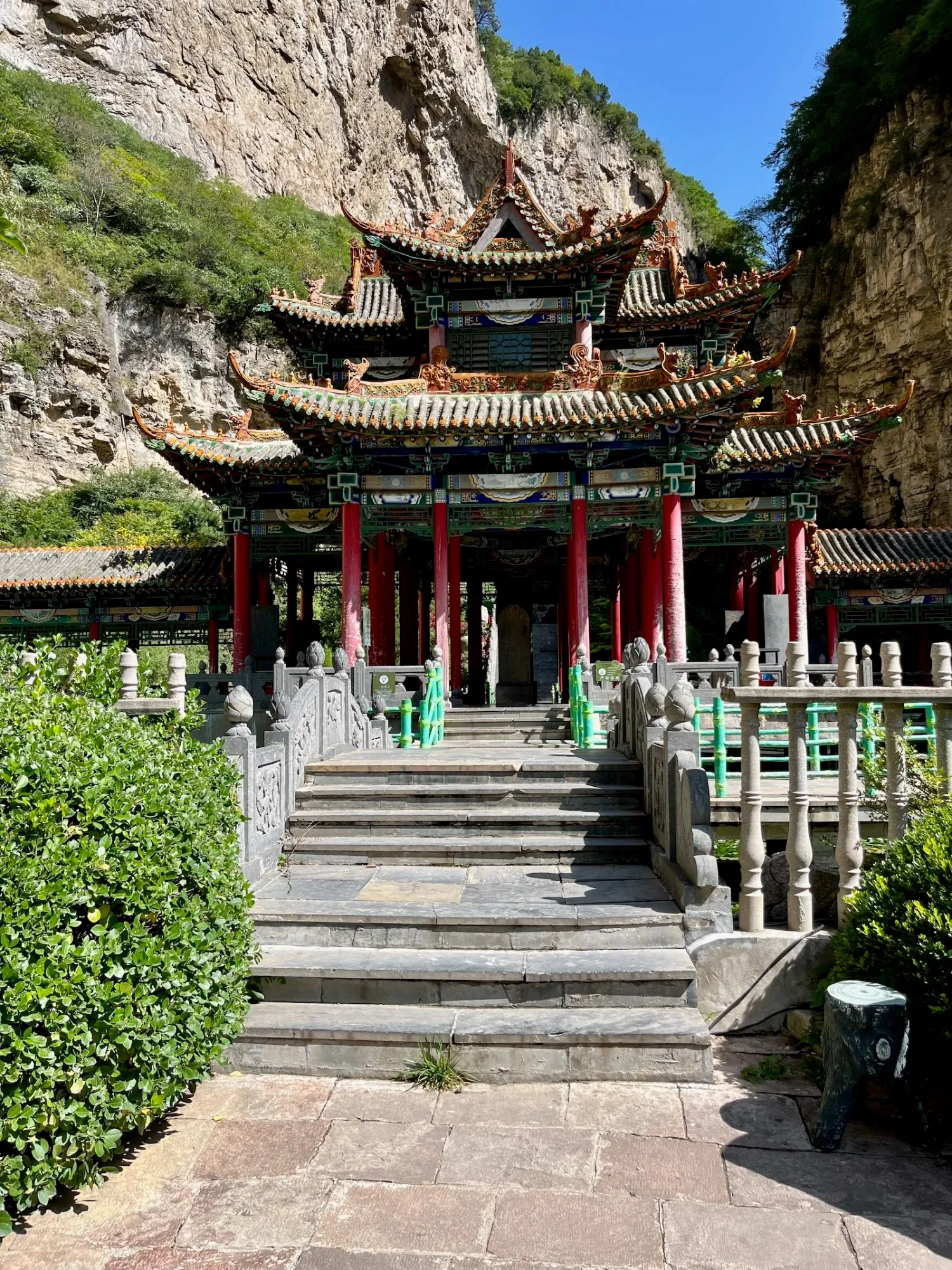
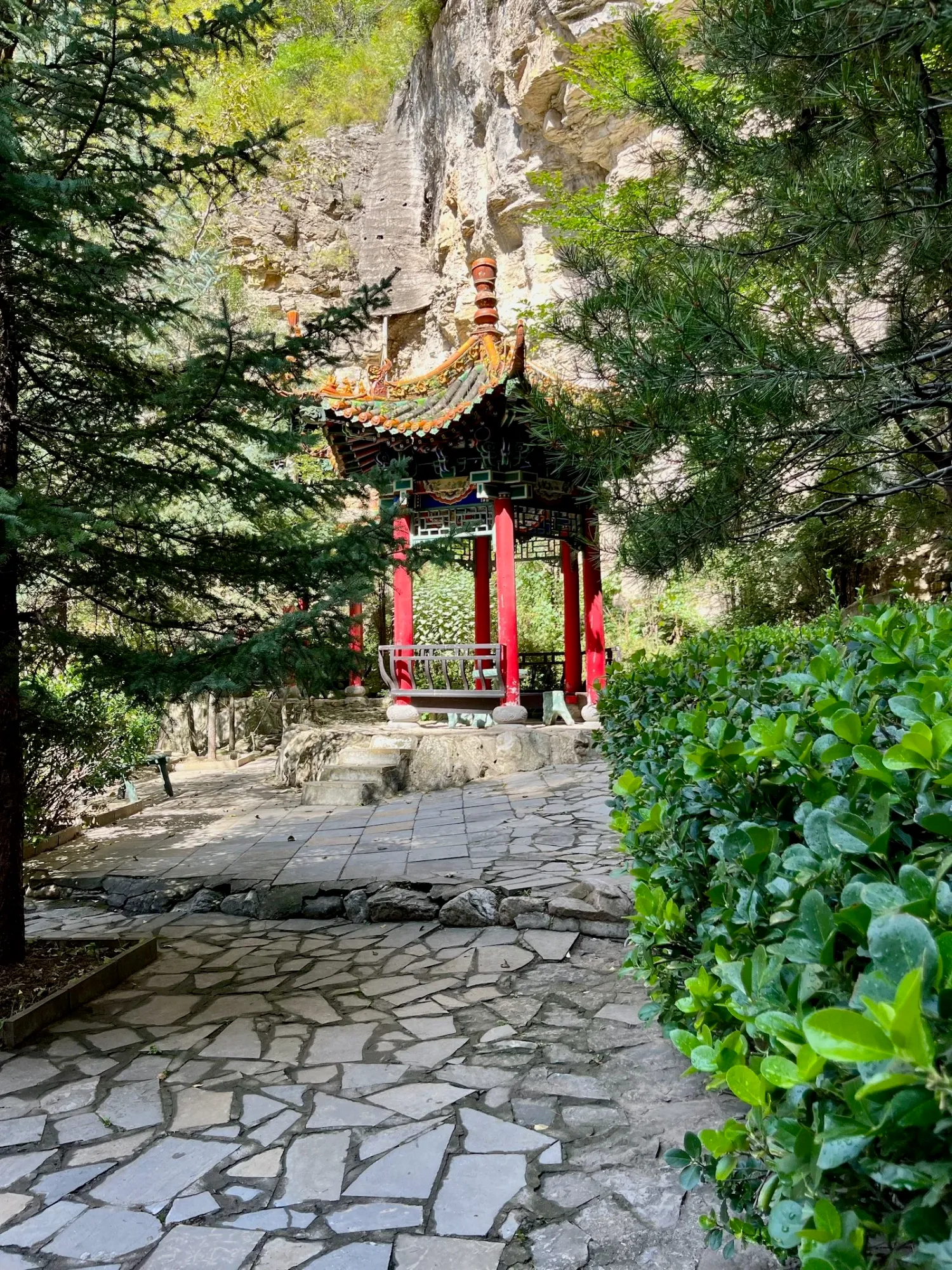
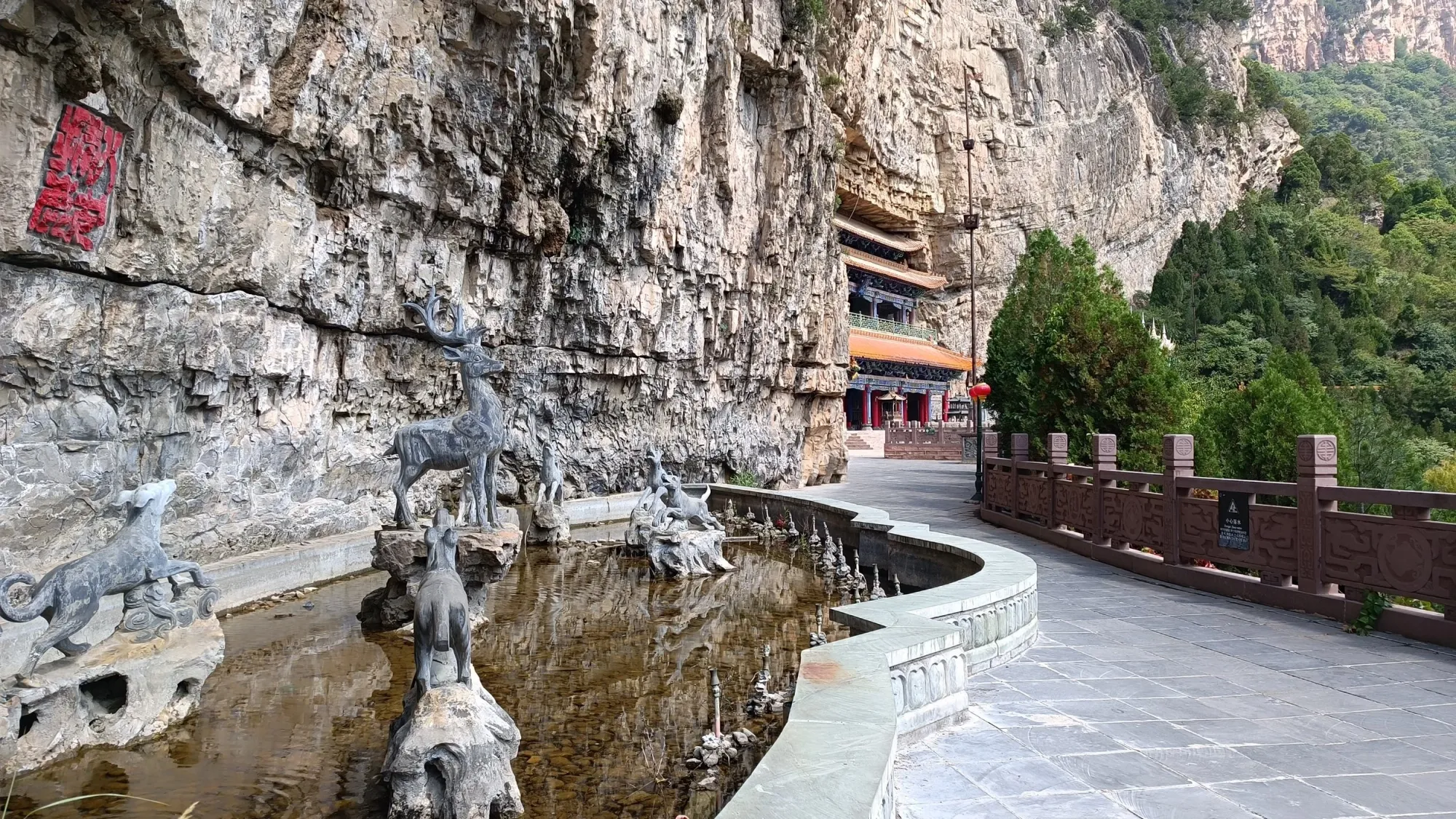
Qixian Valley is one of the most beautiful and calmest places in Mianshan, with Taoist temples beautifully integrated into nature. It's a challenging but short trail, perfect if you enjoy a small shot of adrenaline, and you'll be rewarded with breathtaking mountain views and beautiful, empty temples.
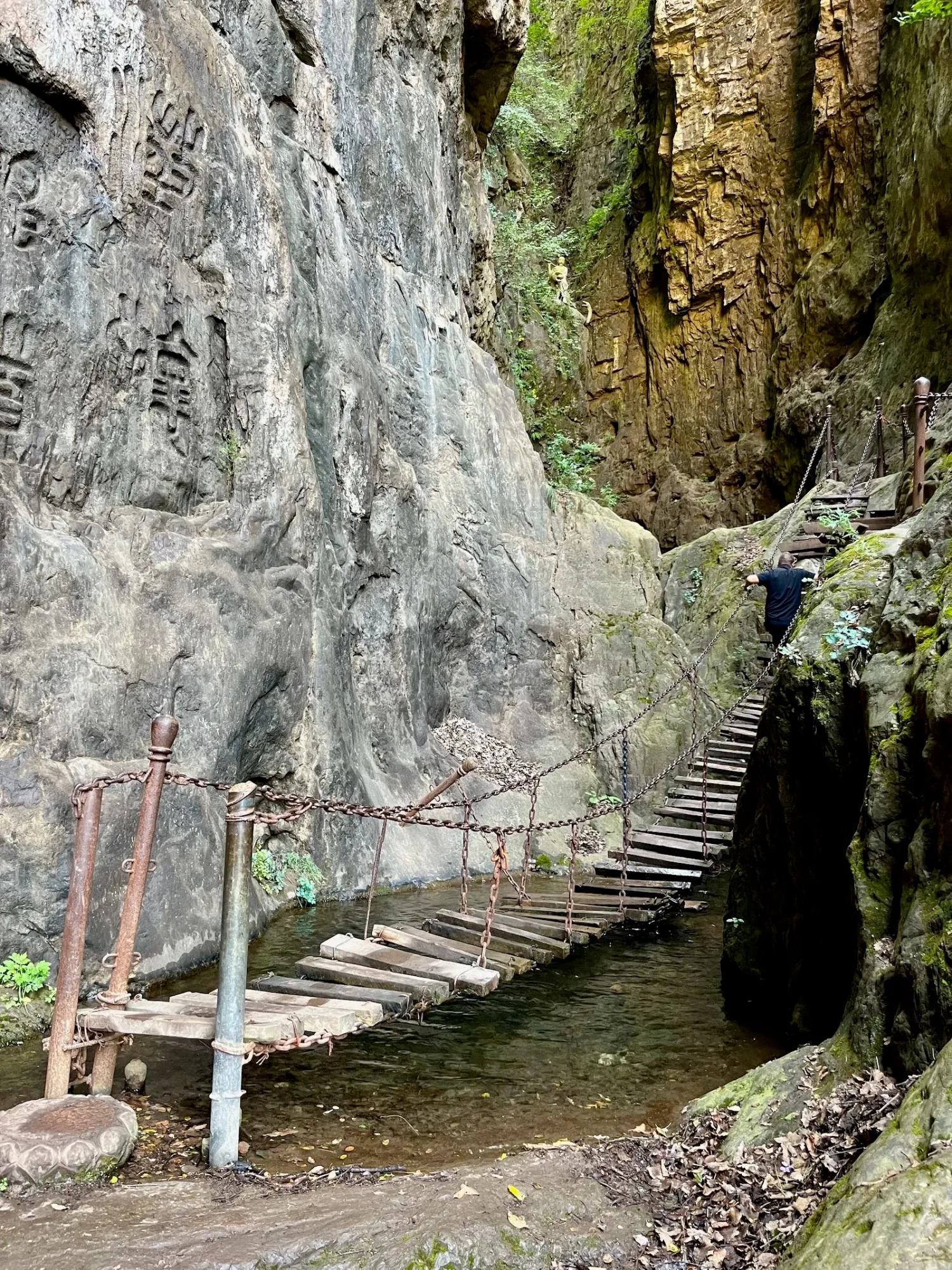
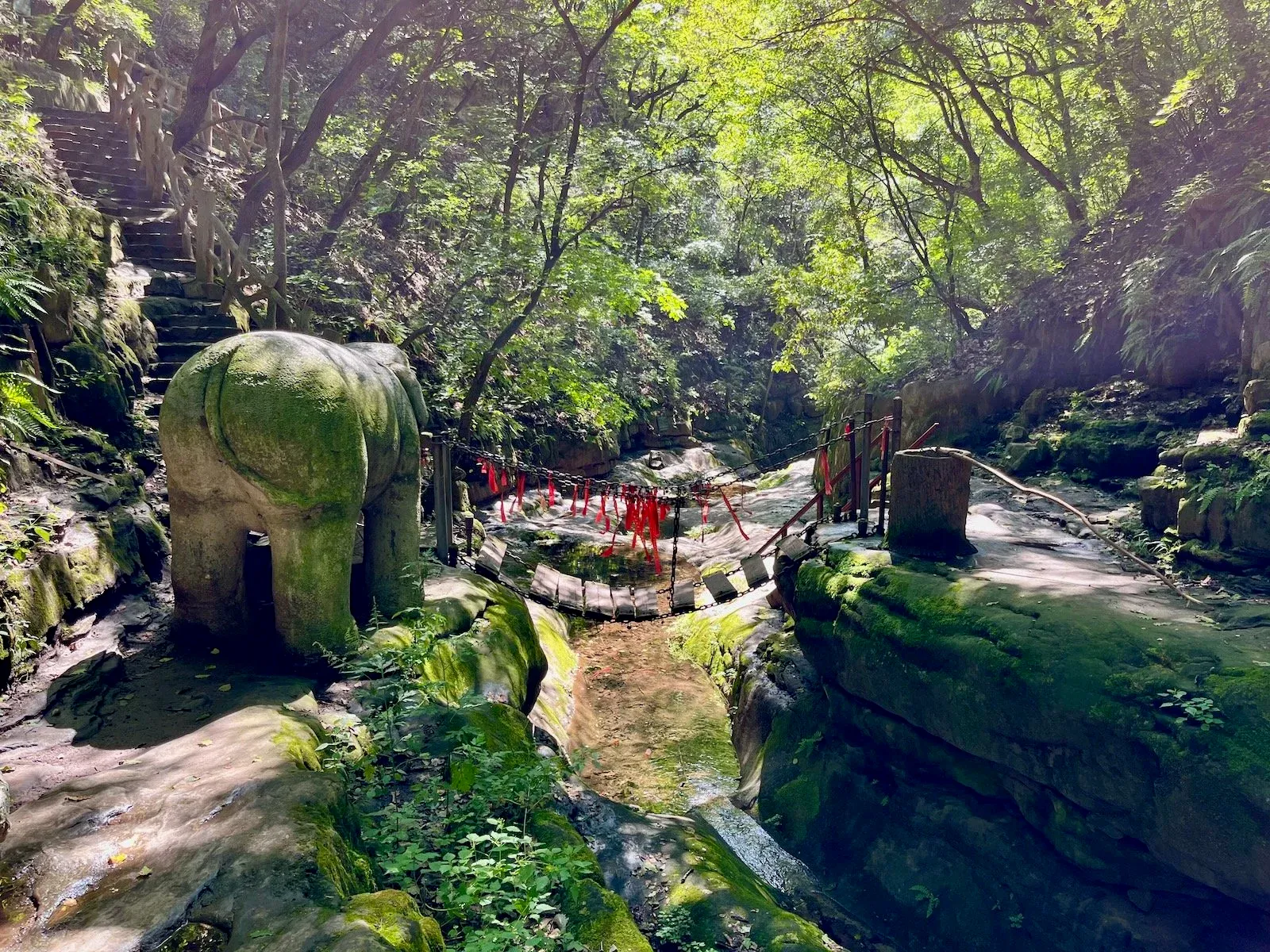
The trail offers two paths, in wood or metal planks fixed to the side of the cliffs and dotted with little bridges suspended above rapids and waterfalls. Even if it looks daring at times, both are well maintained, so choose the one you feel more comfortable with.
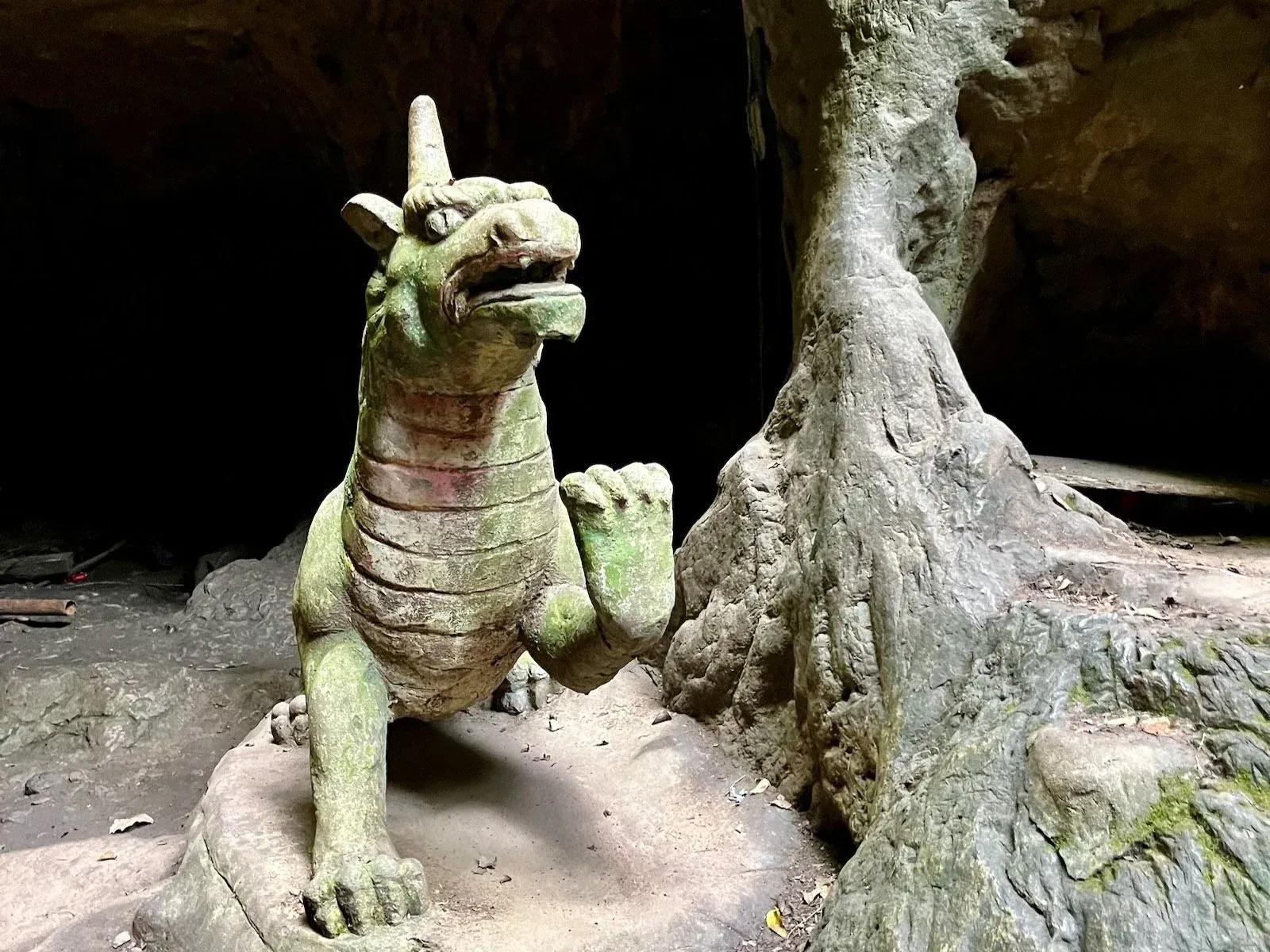
Chinese inscriptions on the cliffs narrate Jie Zitui's pilgrimage to Mount Mian and the many obstacles he faced. The most challenging section ends in a calm spot with small ponds and statues of an elephant, a sheep and a man from an ancient Chinese tale.
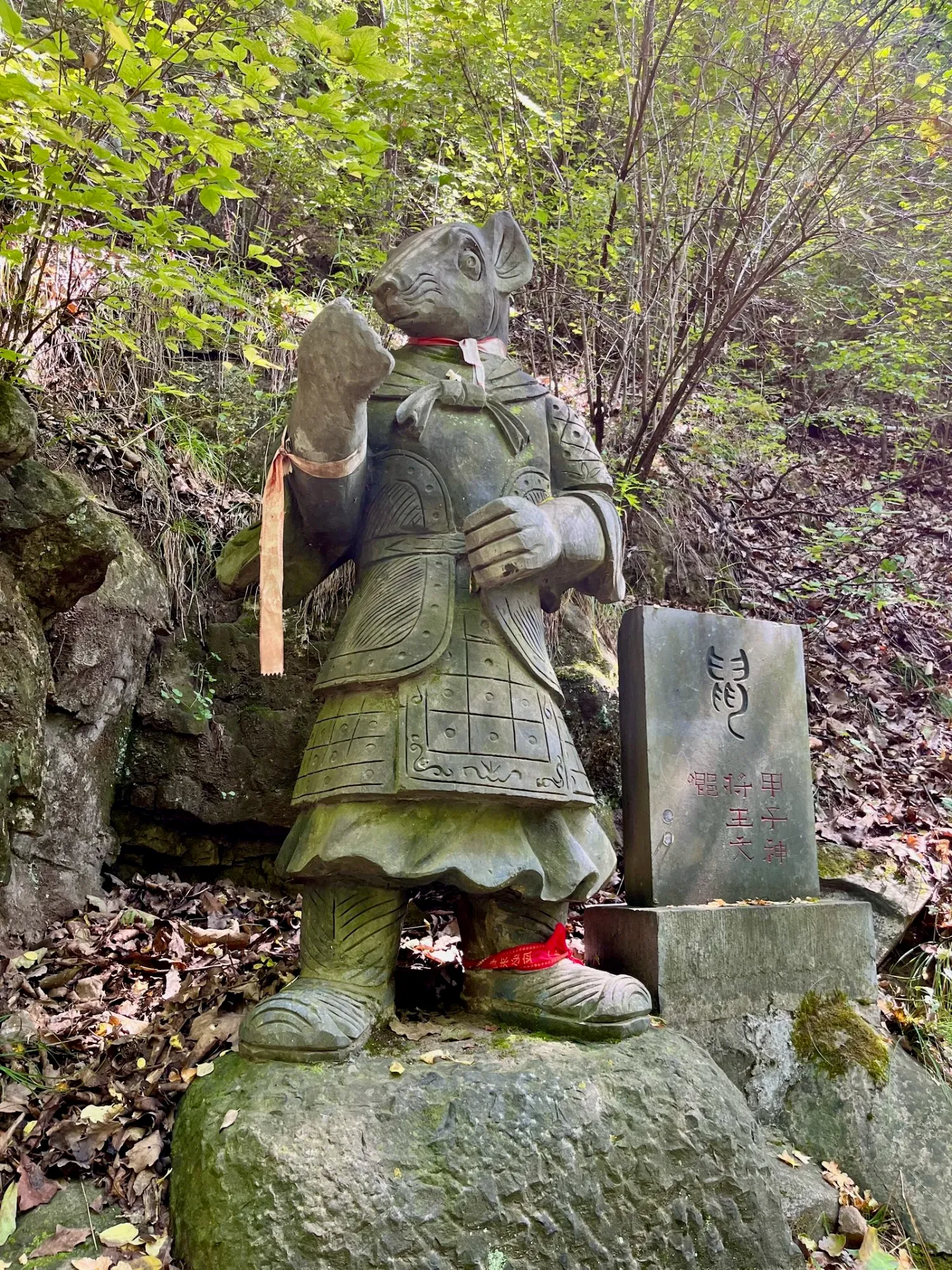
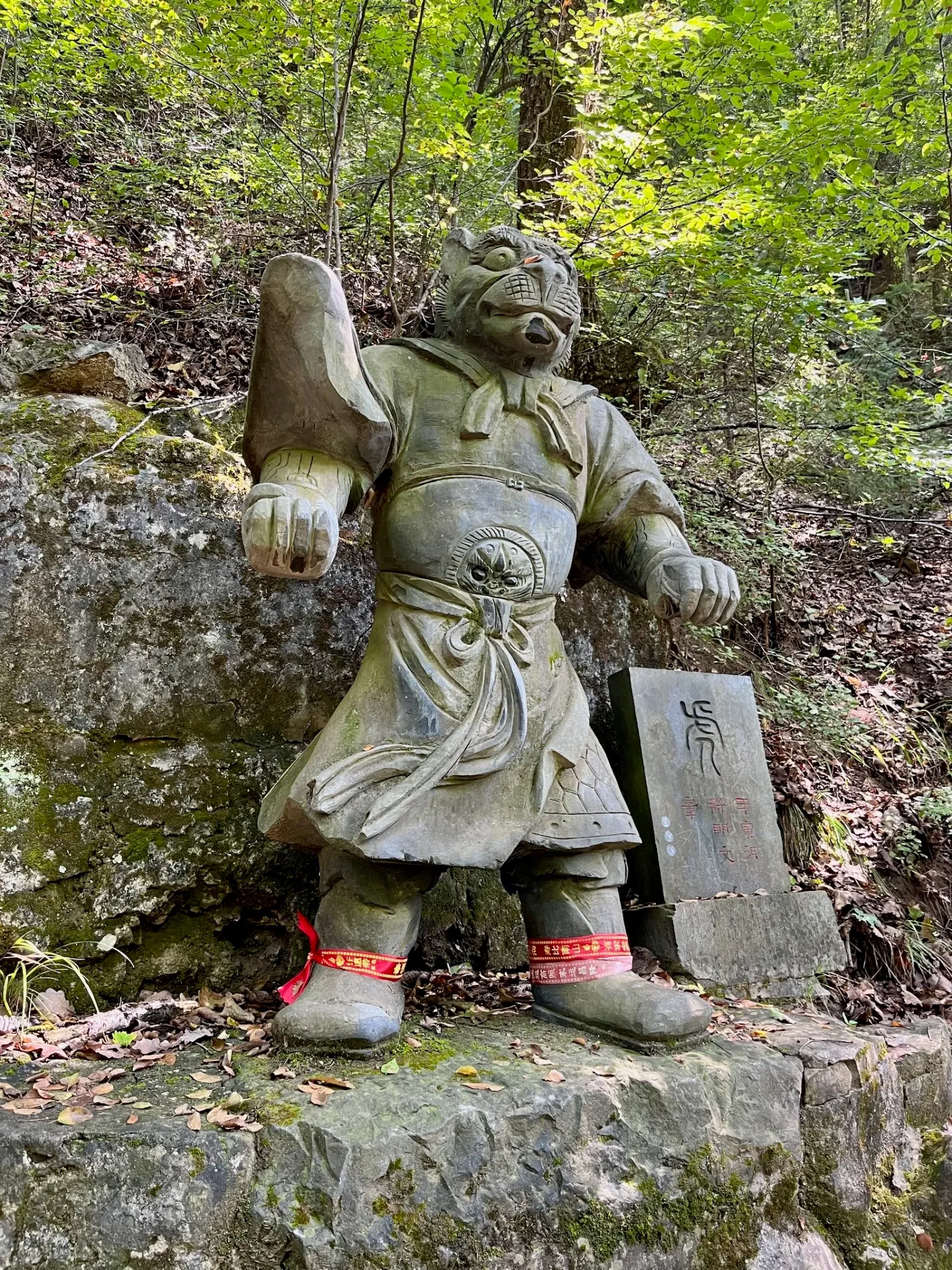
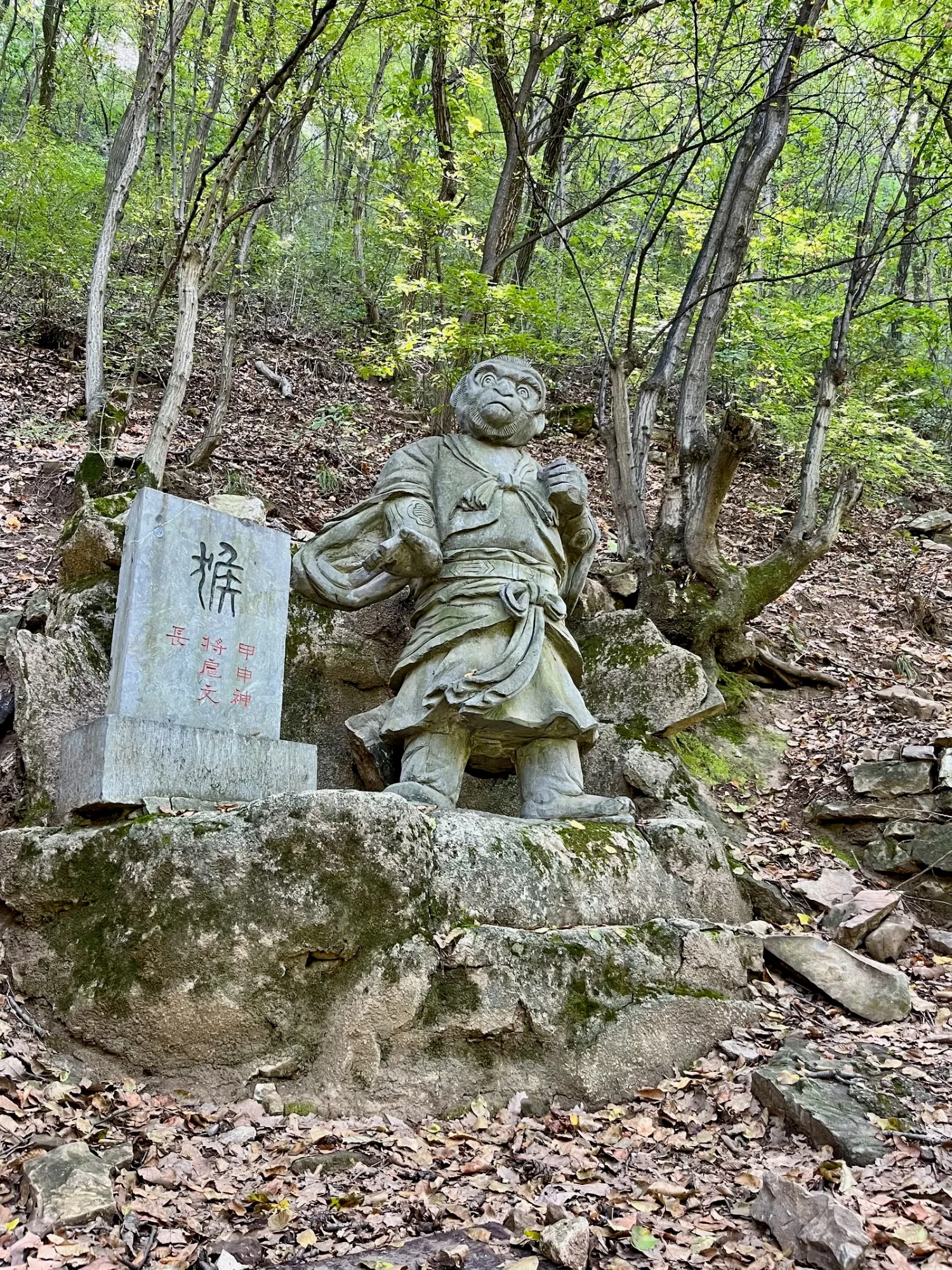
The trail then climbs past statues of all the Chinese zodiac animals. Soon after, you reach a breathtaking spot to enjoy the view and the sounds of the mountain's fauna and flora: the perfect place to rest and eat some snacks before continuing.
 STOP 3
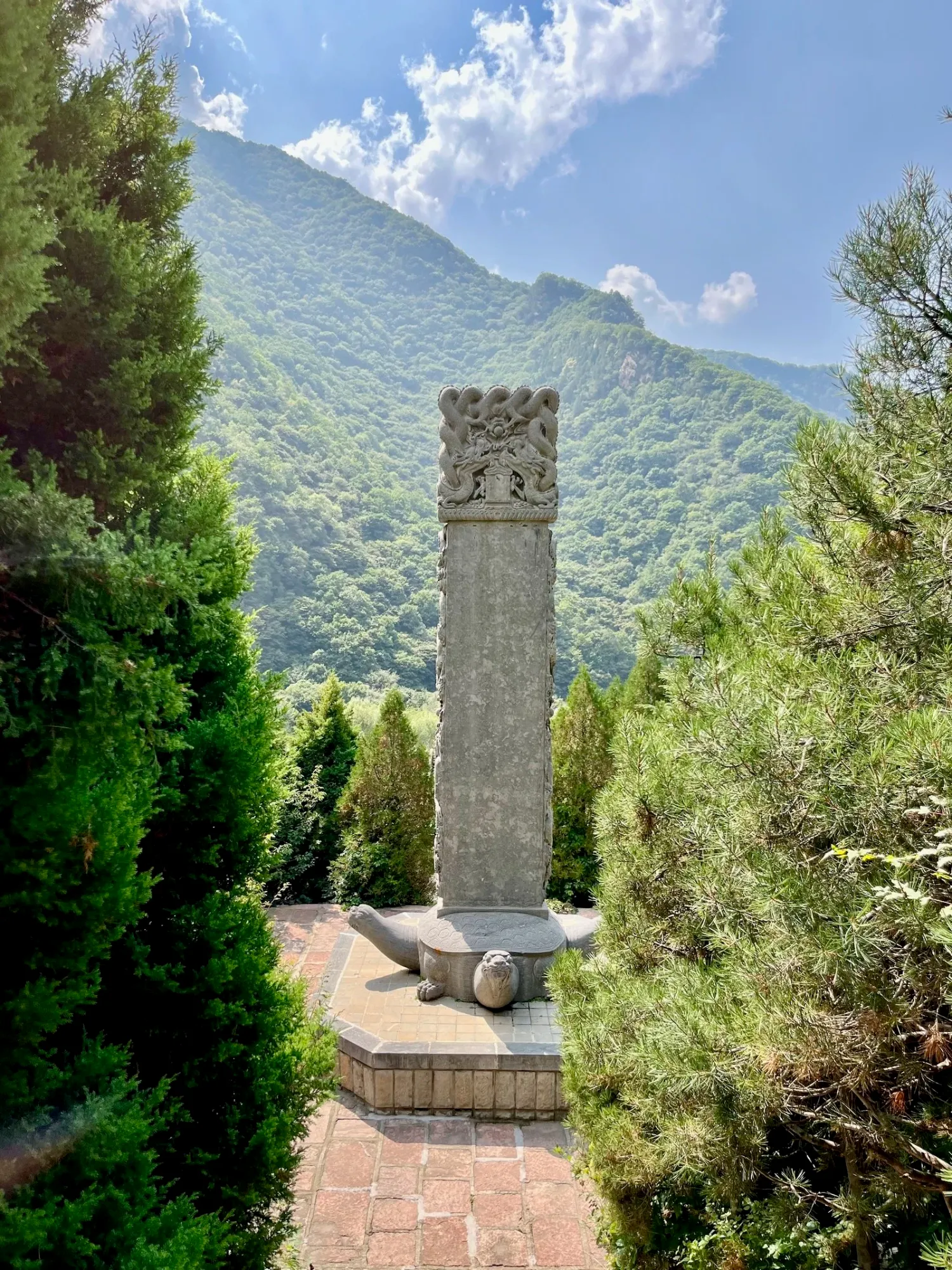
Lord Jie Tomb
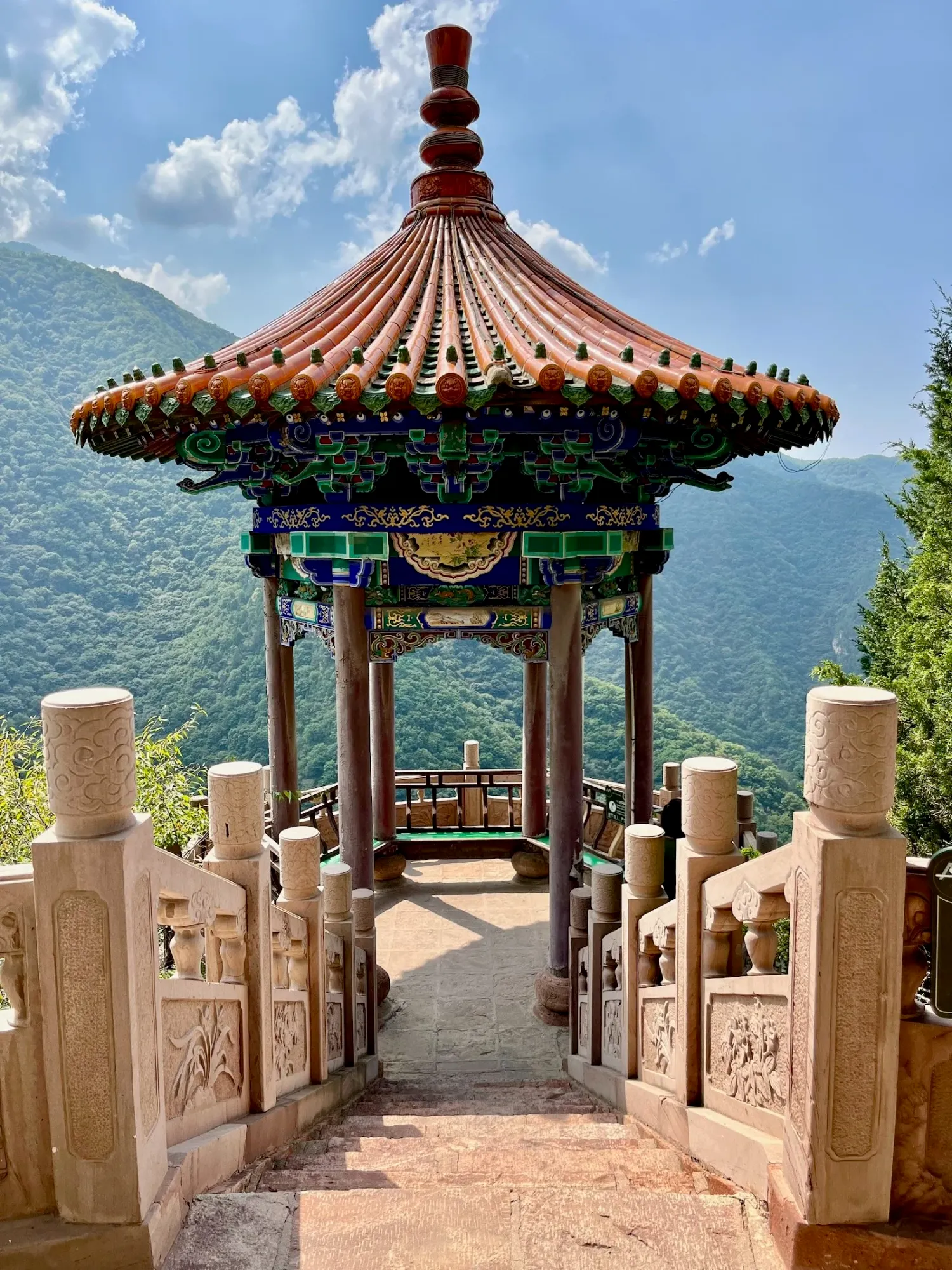
To visit Lord Jie Tomb, take the stairs up from this point. You will soon reach a viewpoint with a wide overview of Mianshan, the perfect place to relax and spot the temples scattered across the mountains in silence. Keep heading up to find Lord Jie's final resting place.
Jie Zhitui's legend, originating in the 3rd century BC, tells of his selflessness and loyalty to his lord, Chong'er. Jie Zhitui, also known as Jie Zitui, was an aristocrat who served Prince Chong'er during the Spring and Autumn Period. Despite his loyalty and sacrifices in hard times, Jie was overlooked when Chong'er rose to power as Duke Wen of Jin.
Feeling unappreciated, Jie retired to the forests with his mother and refused to leave. Legend has it that Duke Wen ordered the forest set on fire to force him out, and Jie and his mother died in the blaze.
Over time, Jie came to be revered as a Taoist immortal in central Shanxi, commemorated with rituals that eventually evolved into China's Cold Food Festival. You can read more about his story in this Wikipedia article.
From the tomb, the path continues to the top of the mountain and on to Lord Jie Temple. Since we had only one day, we saved time by heading back down and following the stone road on the left to the temple.
 STOP 4
Lord Jie Temple
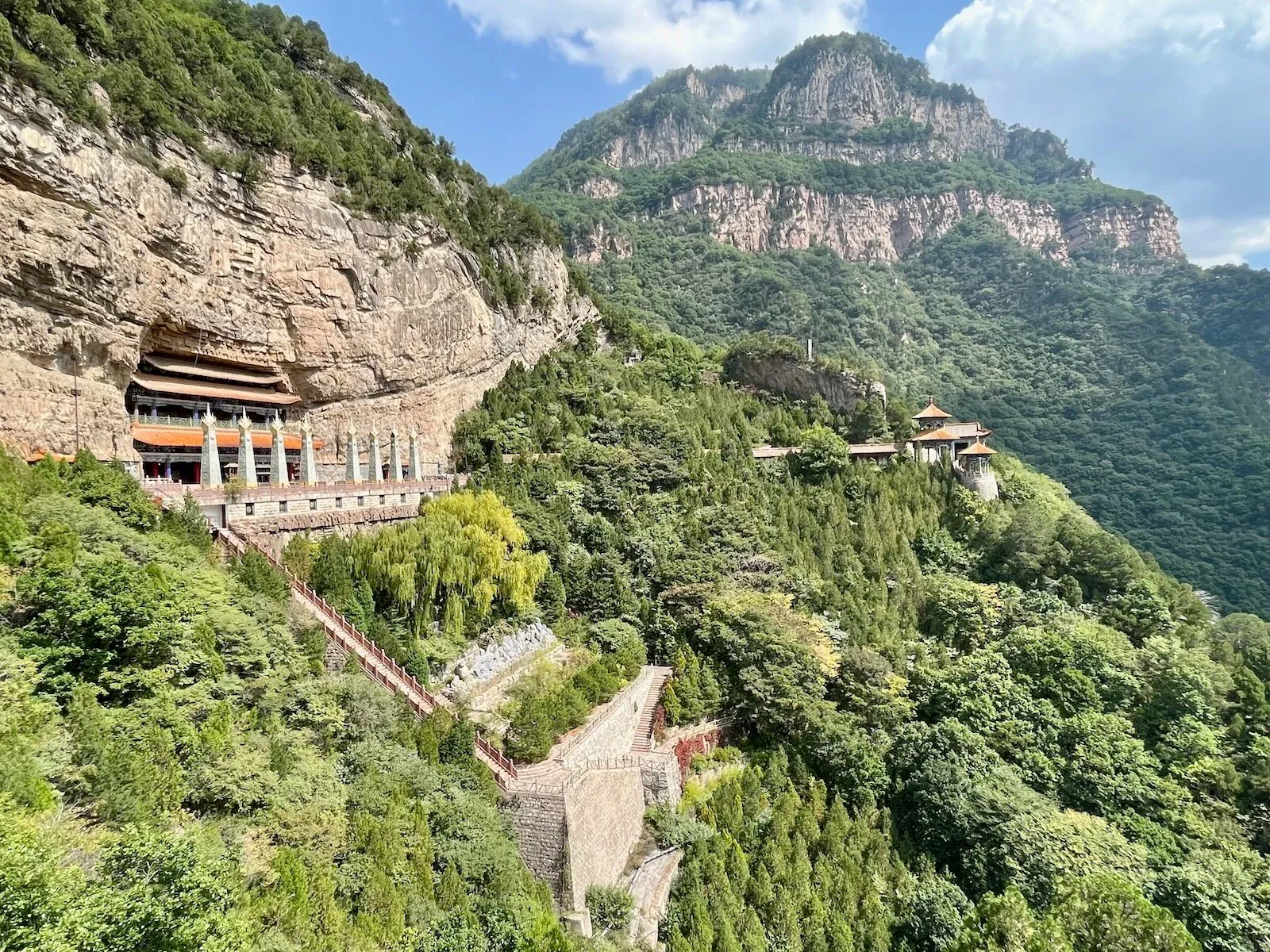
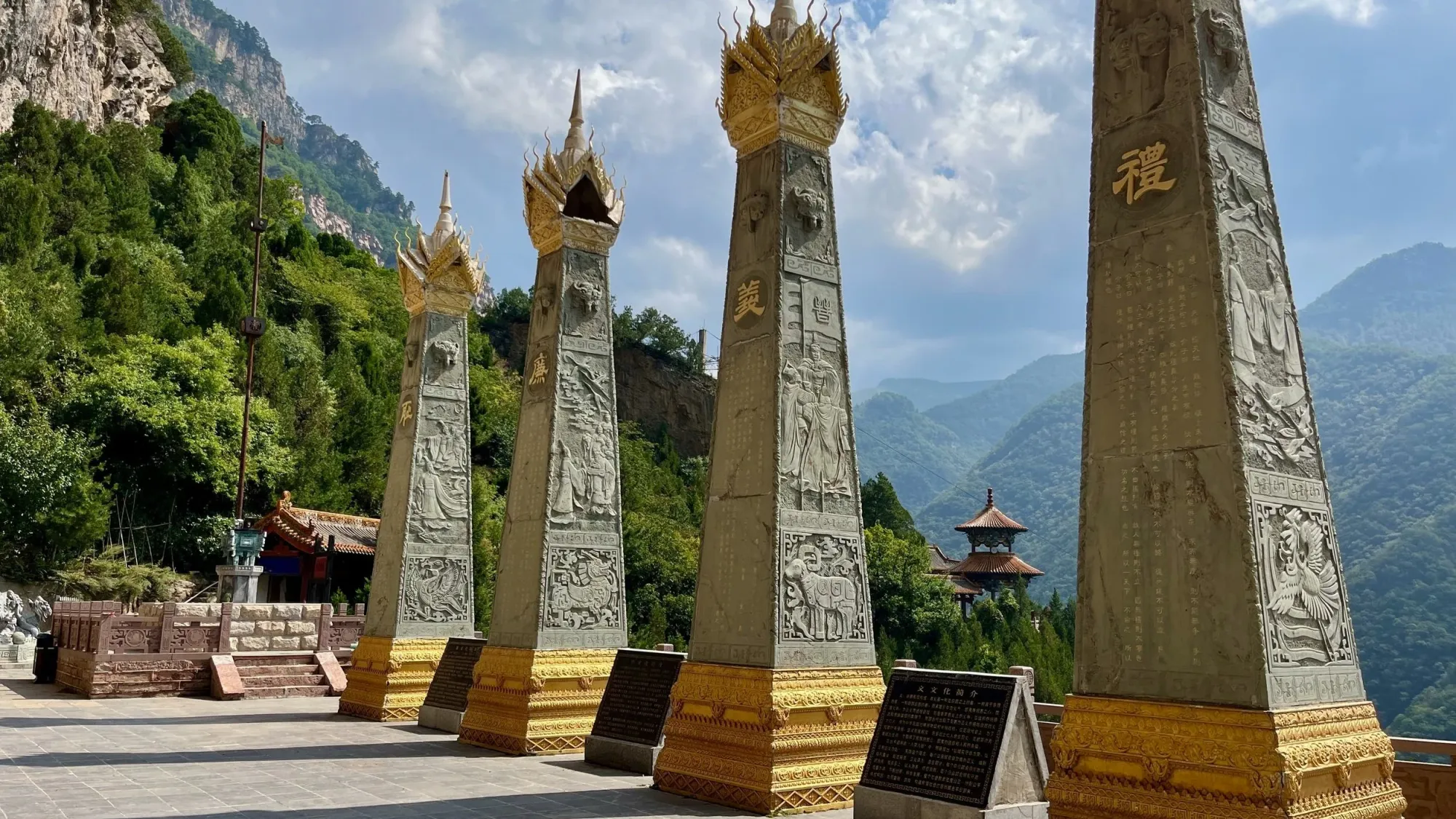
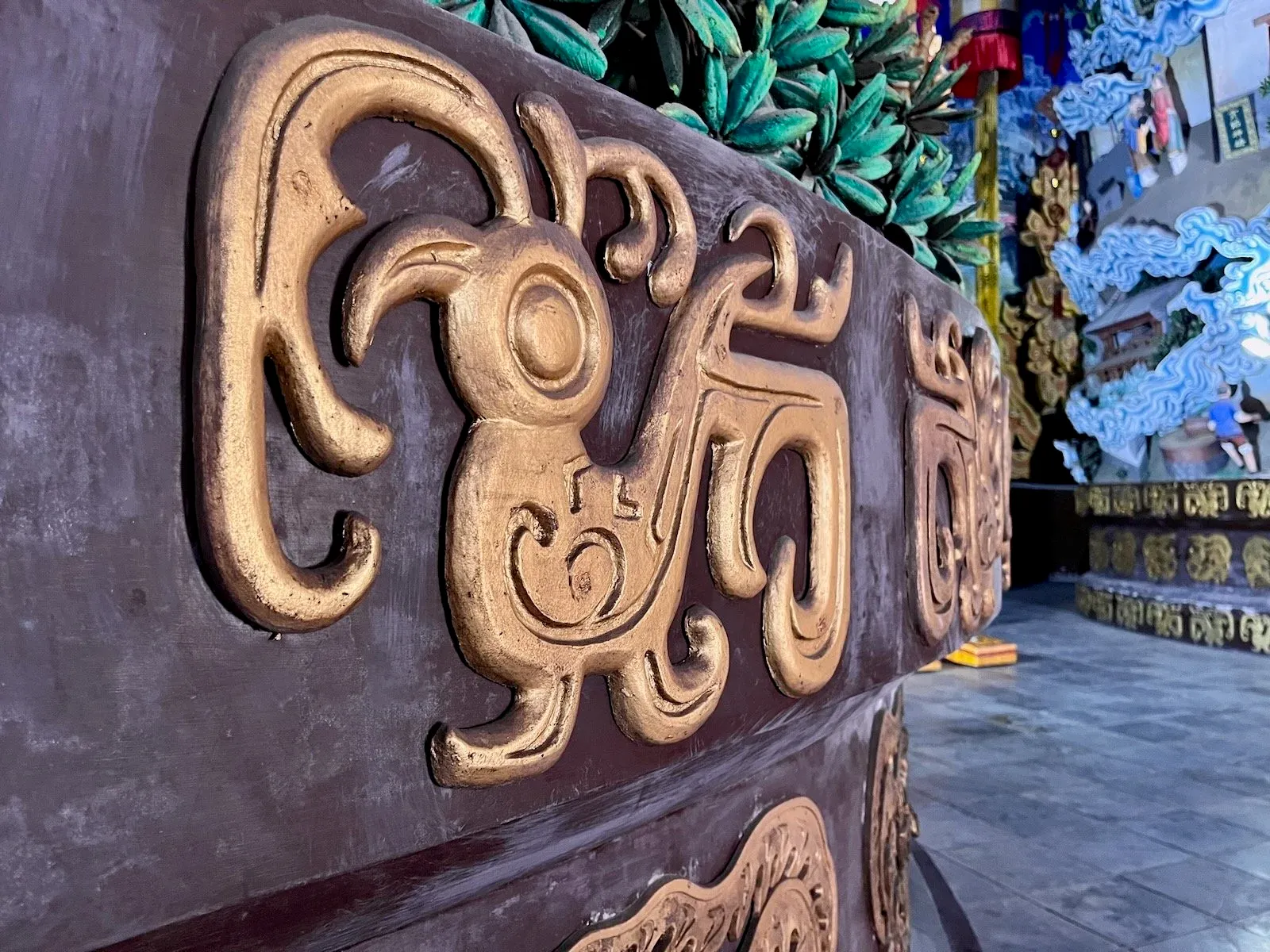
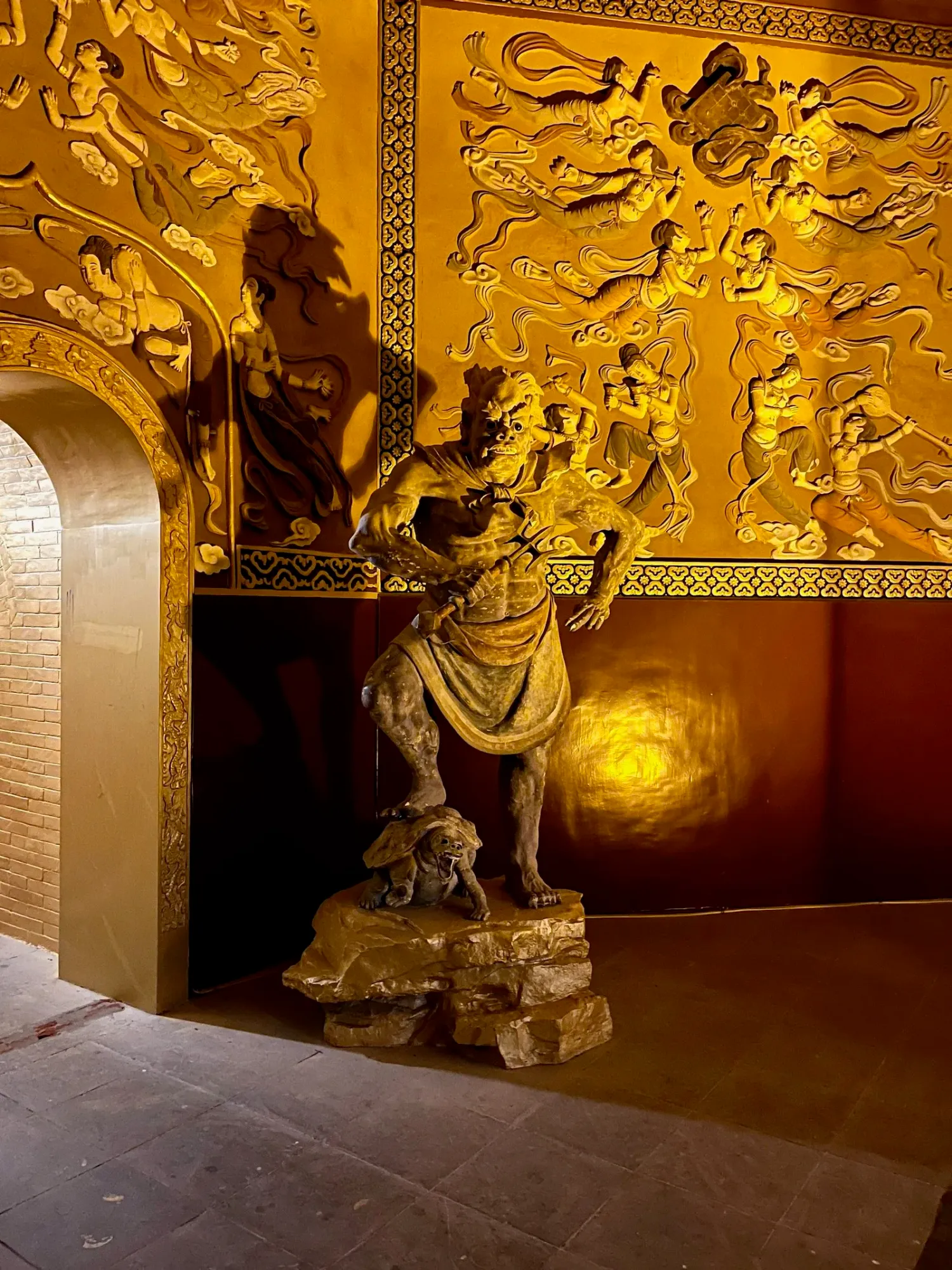
Dedicated to Lord Jie, a revered figure in Chinese folklore, the Lord Jie Temple is carved into the mountain and adorned with 8 columns with inscriptions and detailed carvings.
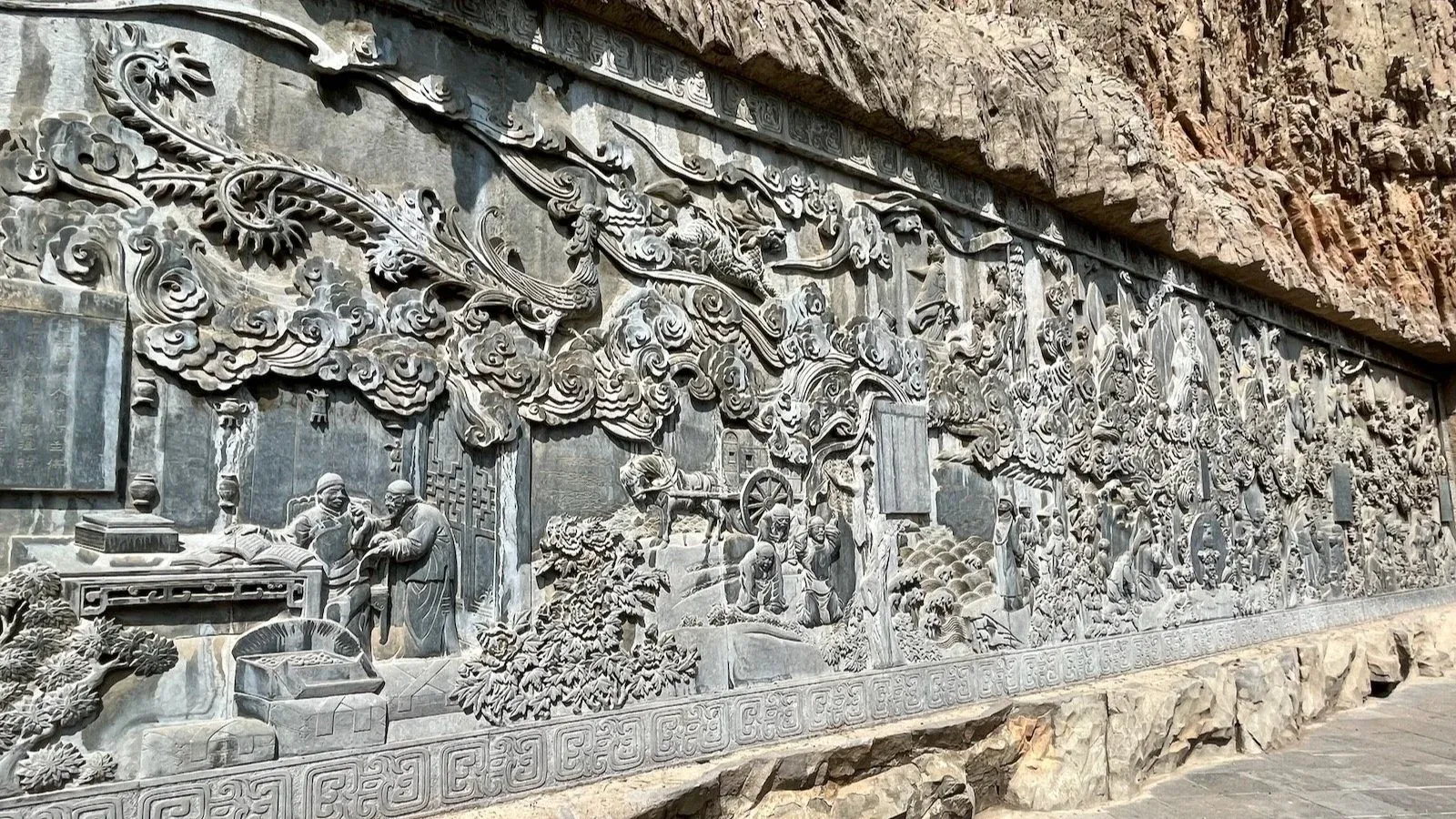
Inside, you will be amazed by a highly decorated room full of Taoist figures and paintings. The colourful carvings on the walls depict scenes from the life of the almost mythical Jie Zhitui and the many legends about him. The tridimensionality of the figures and the brightness of the colours bring these stories to life in what was, for us, the most impressive temple of the Mianshan region.
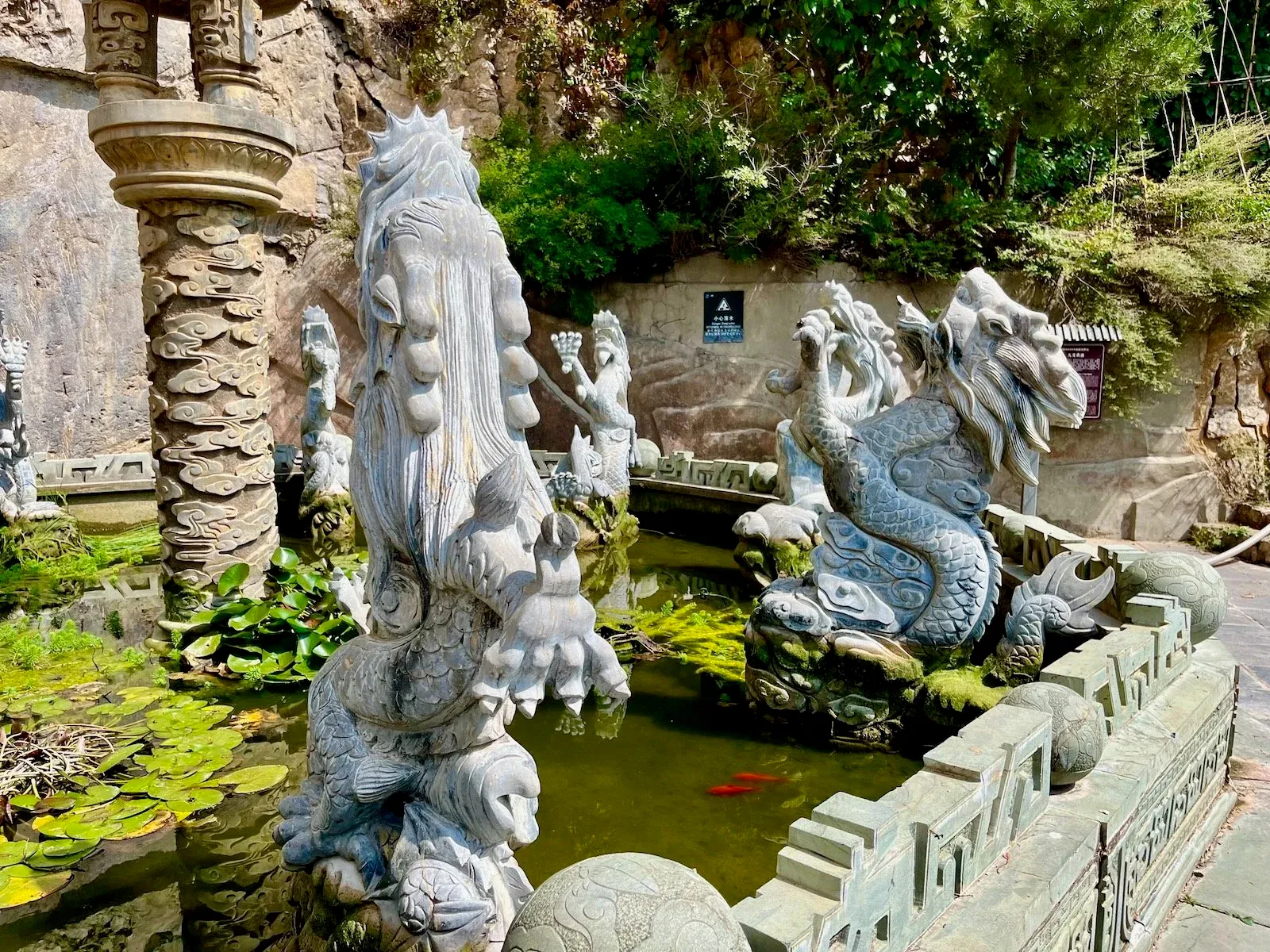
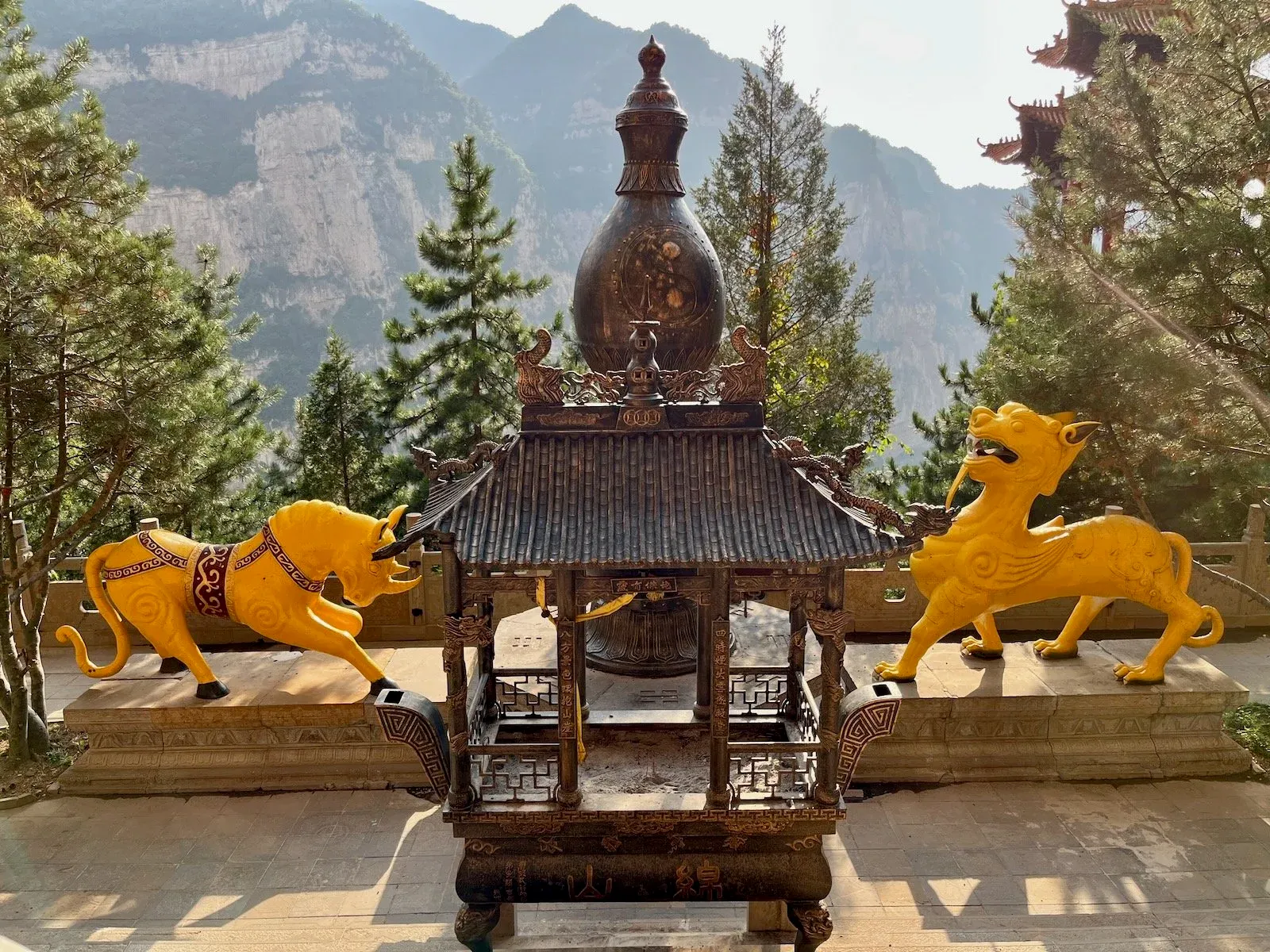
Walking around, other features made us feel we had entered the world of Akira Toriyama's Dragon Ball: the dragon fountain, with dragons trying to catch a bright yellow crystal ball, or the four-headed turtle that reminded us of Master Roshi.
Heading down to the Shuitaogou area, you can choose between the Five Dragon Waterfall path or the bus. We skipped the Five Dragon scenic area for lack of time and hopped off at the first Qixian Valley bus stop (in the direction of the entrance).
 STOP 5
Zhengguo Temple
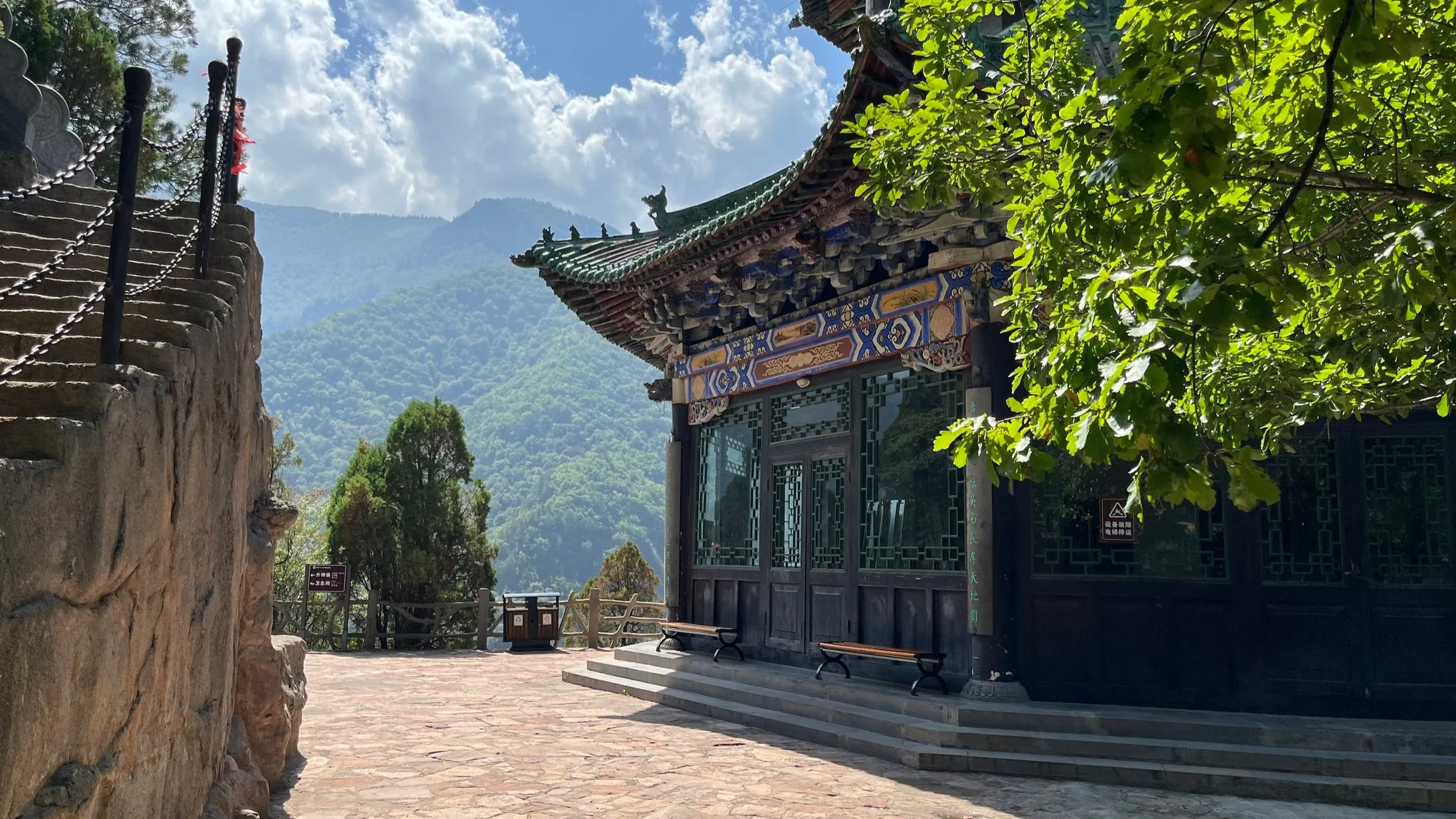
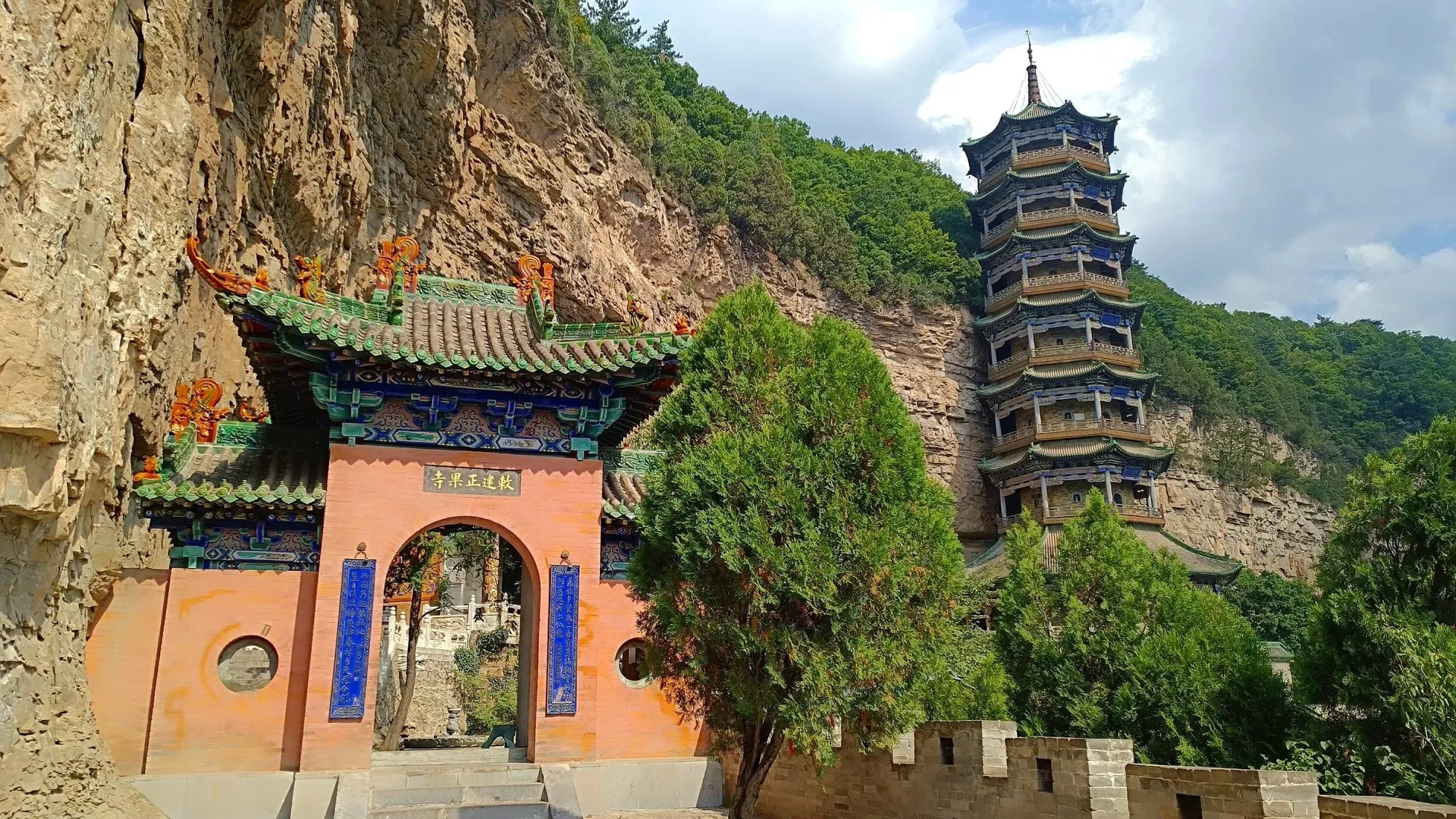
From the bus stop, a challenging climb up the cliff leads to Zhengguo Temple. To save time and energy, take the elevator for 15 CNY. The temple is adorned with vibrant green and golden accents and intricate dragon motifs, but what truly sets it apart is that it houses the largest collection of Buddhist mummies in China.
The temple has recently become better known thanks to its appearance in the video game Black Myth: Wukong.
 STOP 6
The Zhengguo mummies
Within the temple grounds are twelve mummies of revered monks and sages from various dynasties. These Buddhist monks devoted their lives to meditation, gradually letting go of earthly activities like eating, drinking and even breathing in pursuit of transcendence.
Centuries have passed, yet their bodies, preserved in meditation pose, are still shrouded by clay statues mirroring their earthly forms: a humbling reminder of the enduring power of faith in Buddhist tradition.
 STOP 7
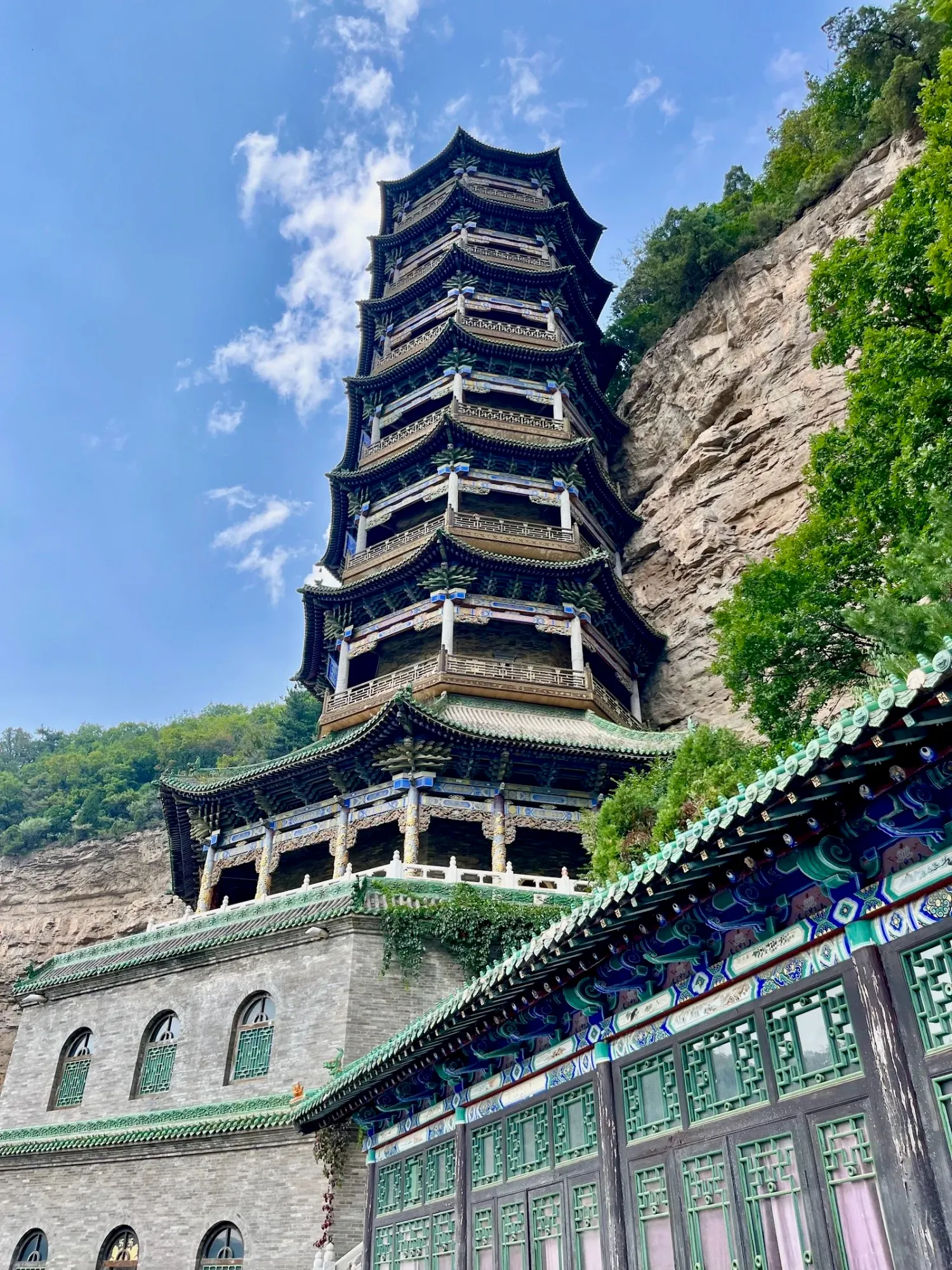
Zhengguo Pagoda
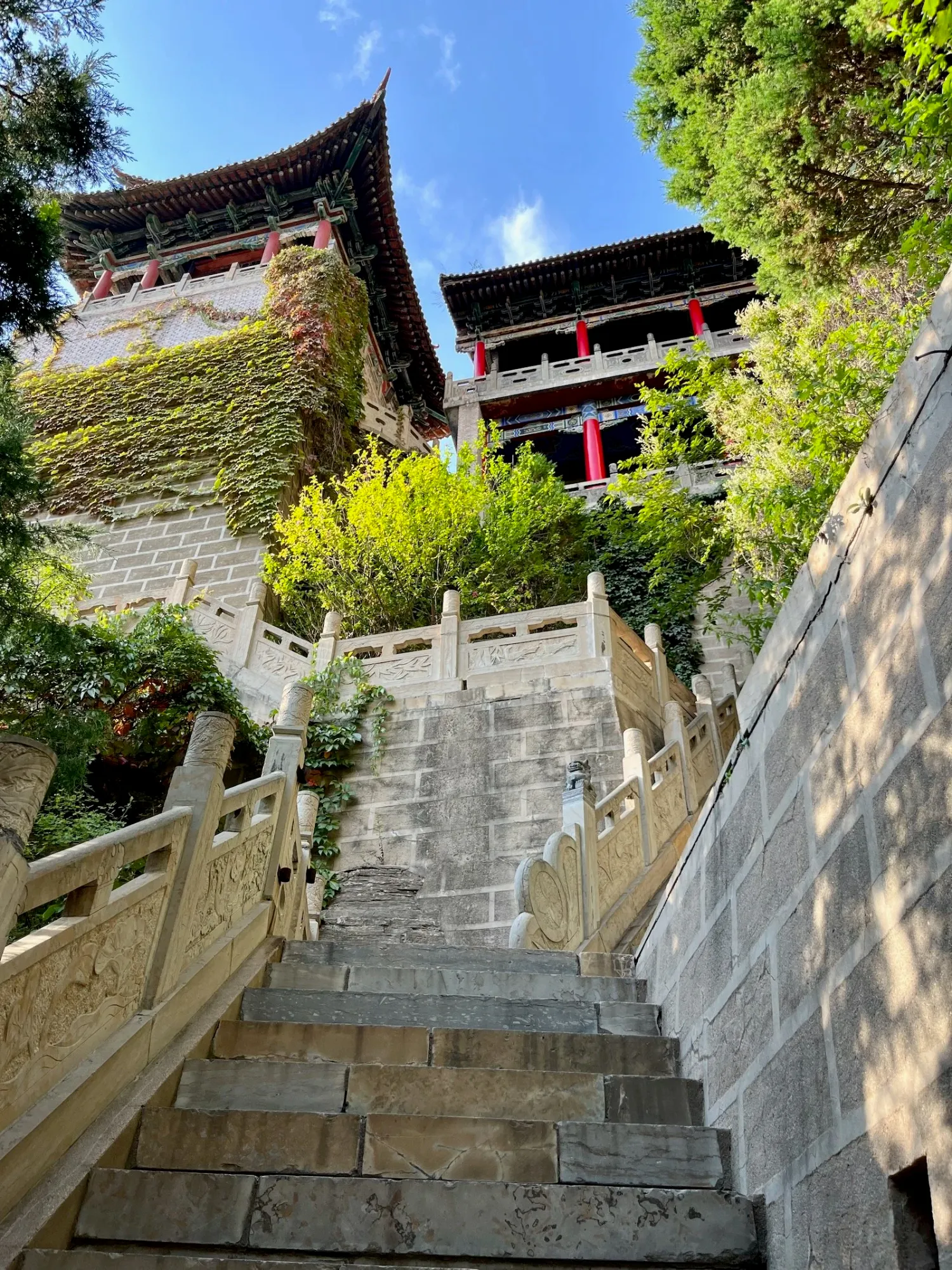
Next to the temple stands the Zhengguo Pagoda, a richly decorated seven-storey pagoda with a breathtaking view of Mianshan from the top. All floors are reached by narrow spiral stairs, and each is decorated differently, though all have stone statues of various divinities and walls carved and painted in vibrant colours.
From the summit, follow the stone trail to the left to reach the top of the Sky Plank Road in about 20 minutes.
 STOP 8
Sky Plank Road
When we reached the Sky Plank Road, we were glad we had taken the elevator up to the pagoda and avoided climbing all of its stairs. This way we could enjoy the view at ease.
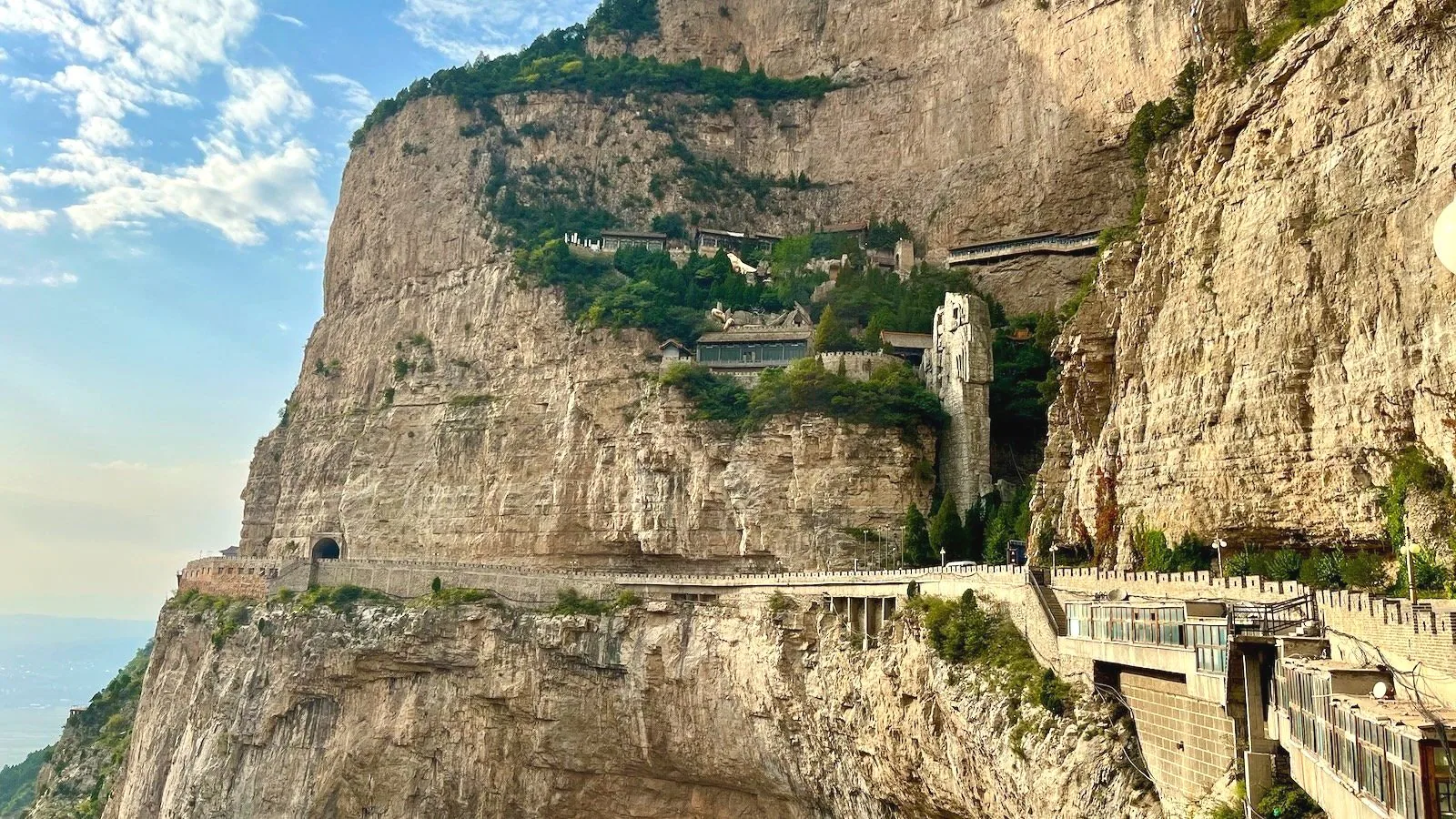
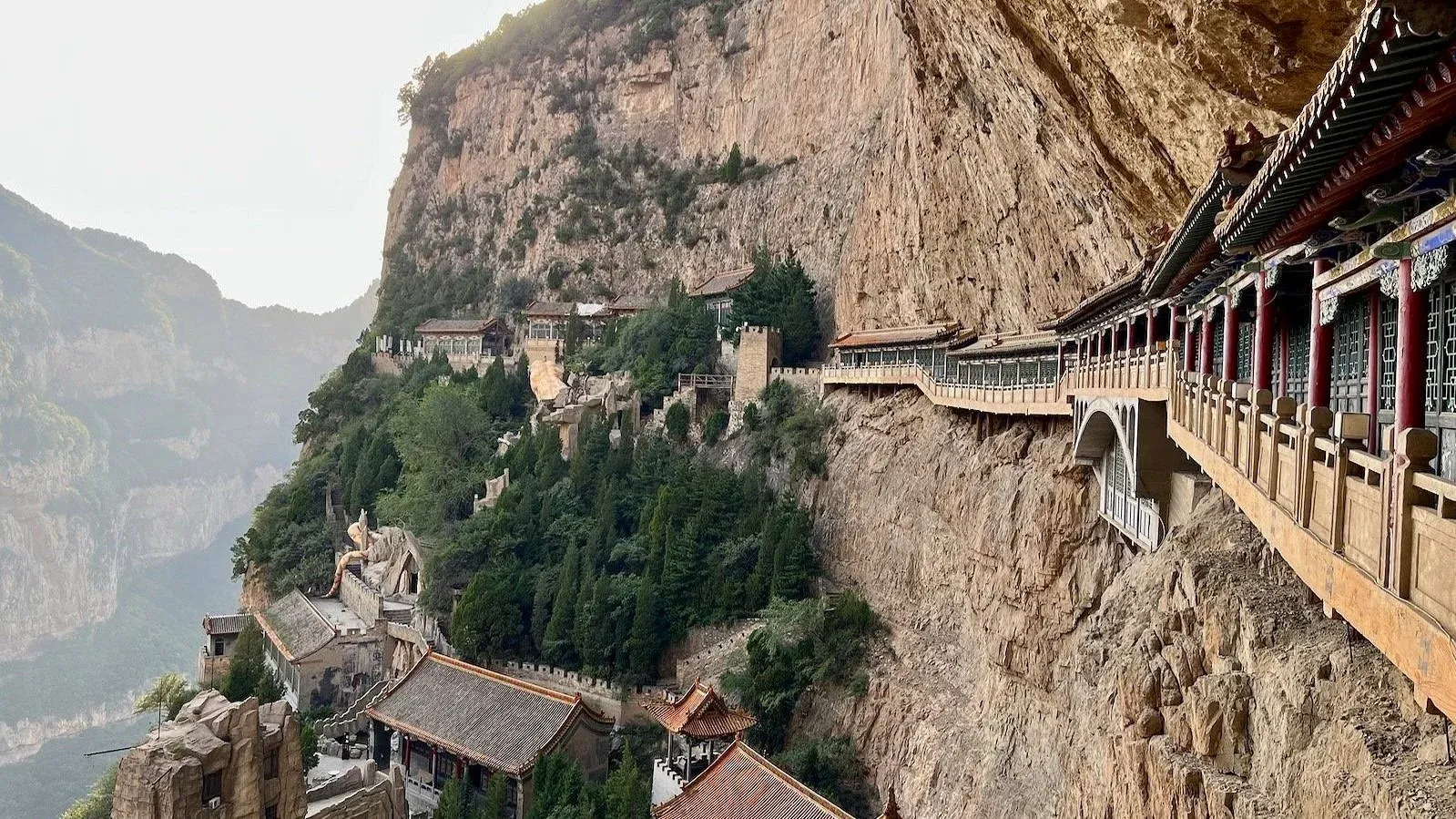
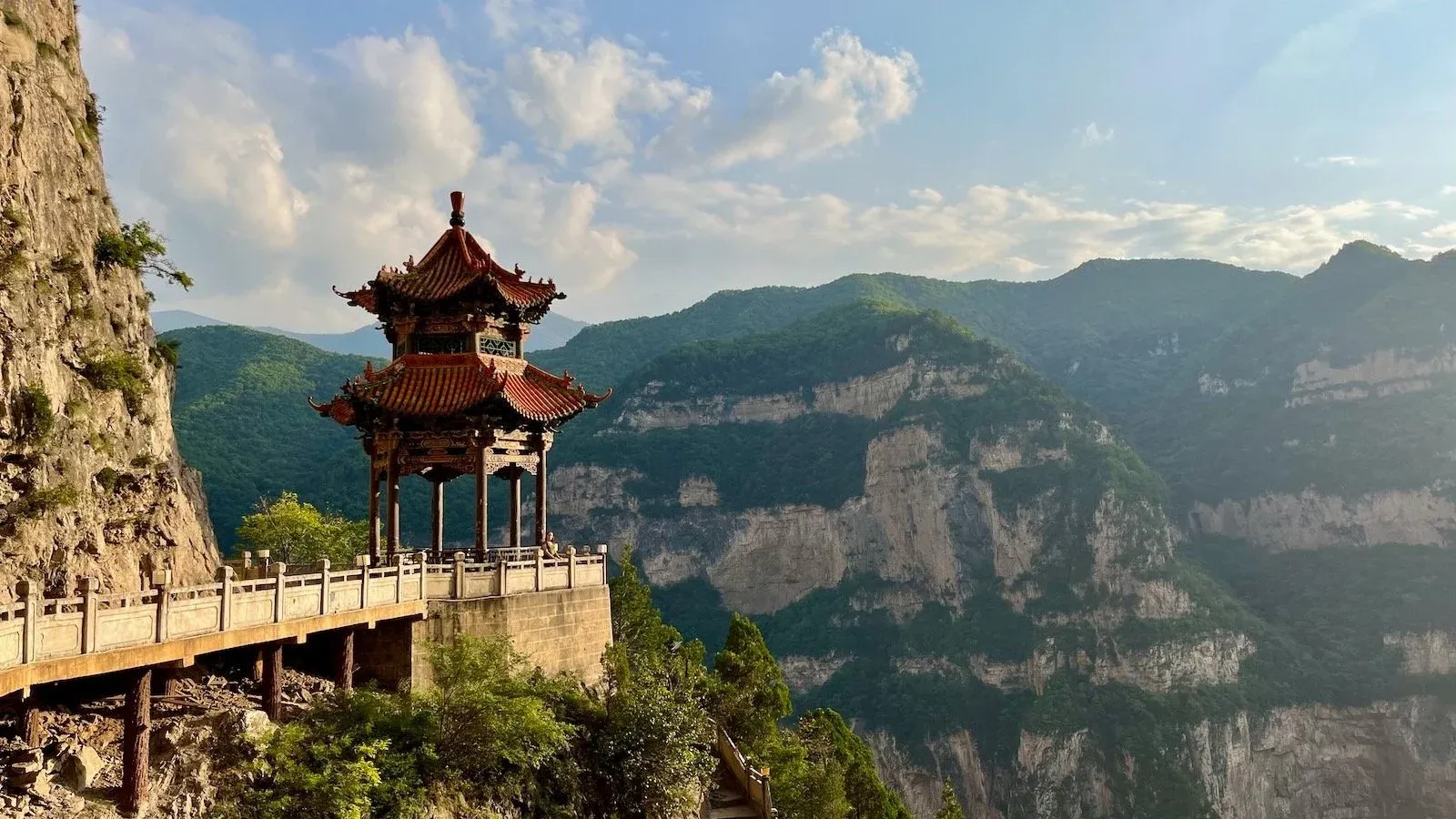
This elevated pathway winds along Mianshan's sheer cliffs with stunning views of the landscape. Walking along the narrow walkway, high above the ground, you might feel like you're walking on air, with nothing but the valley below you. The wooden planks creak beneath your feet, and the jagged cliffs, lush forests and distant peaks make a stunning backdrop.
 STOP 9
Yunfeng Temple
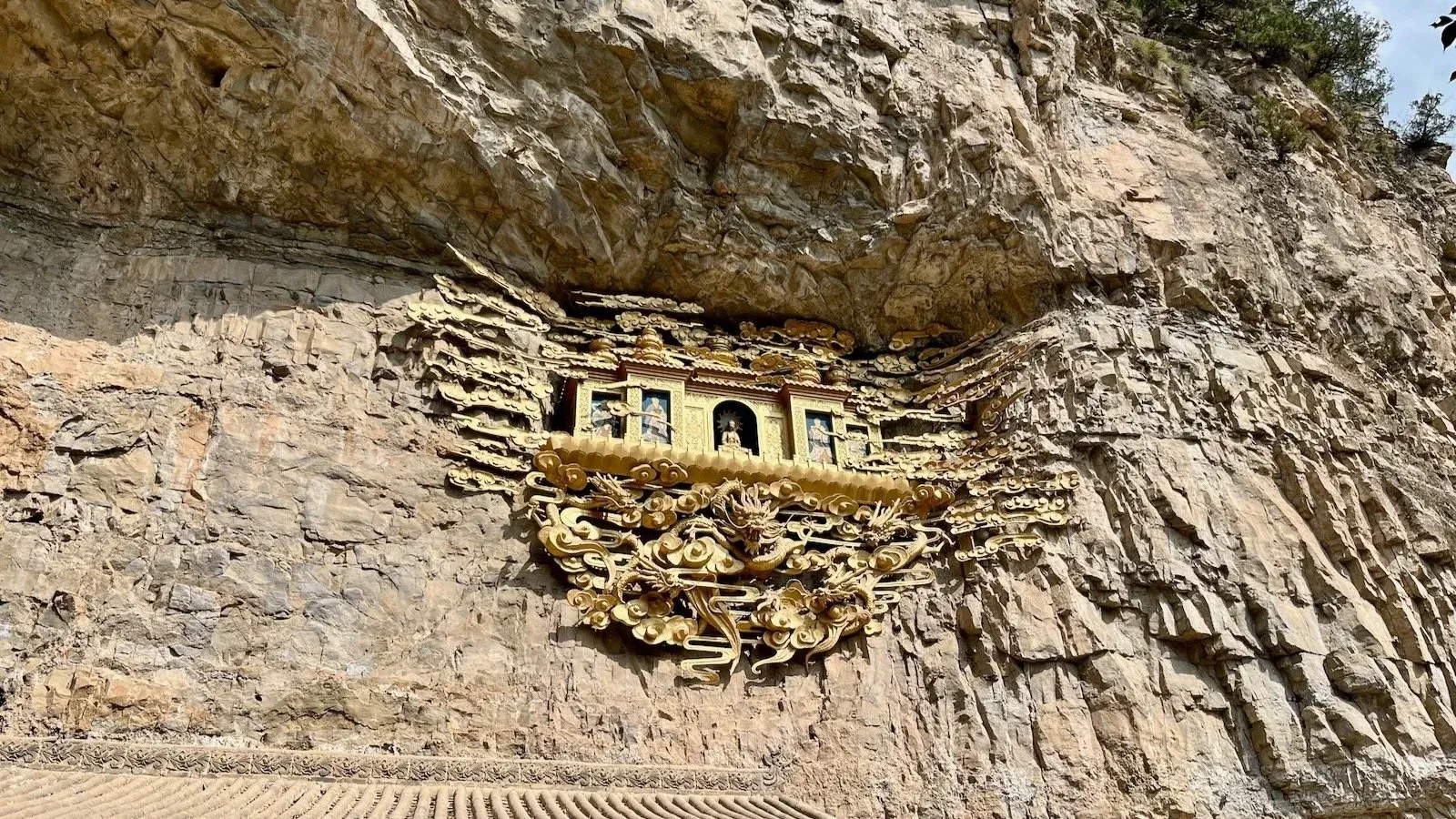
At the bottom of the stairs lies Yunfeng Temple, a renowned Buddhist cave temple on the Baofu rock. Baofu translates as "holding the belly", a name that comes from the rock's resemblance to that posture, holding 200 palaces within its belly.
Numerous bells hang from the cliff walls above the temple, so people can seek blessings in the traditional way.
 STOP 10
Zhujia Hollow
Hop on the bus to the next area, Zhujia Hollow (Zhujiawa). This is where Zhu Wusi, father of the Ming founder Zhu Yuanzhang, sought solace and enlightenment, paying homage to Lingbao Tianzun. Legend has it that Zhu Yuanzhang, on ascending the throne, credited his success to the heavenly gods and made a pilgrimage to Mianshan with his cousin.
During their visit, a breeze blew hibiscus flowers from his cousin's head. The fallen flowers took root and grew into the majestic hibiscus pine, a symbol of resilience and renewal. In honour of this encounter, Zhu Yuanzhang sent his son Zhu Quan to Mianshan to oversee the restoration of the Lingbao Hall.
The area was peacefully deserted at the end of the day. There are a few temples, but not much else to explore, so we recommend skipping it if you are short on time. It is, however, ideal for idyllic photos and the sunset.
 STOP 11
Tianqiao (Sky Bridge)
This ancient bridge spans a deep gorge and offers breathtaking views. The Tianqiao Sky Bridge was originally built in the Tang Dynasty (618–907) and has been restored several times. It is still a vital route connecting different parts of Mianshan, giving access to scenic spots, temples and hiking trails.
Walking across it is a thrilling experience, with a sense of awe and adventure as you traverse the precipitous cliffs and rugged terrain of Mianshan.
Where to eat
If you're hiking the trails, bring food with you. The only vendors we found were near the bus stops, and not all were open. There used to be restaurants, but most were closed when we visited, so don't expect full meals on the mountain.
Where to stay
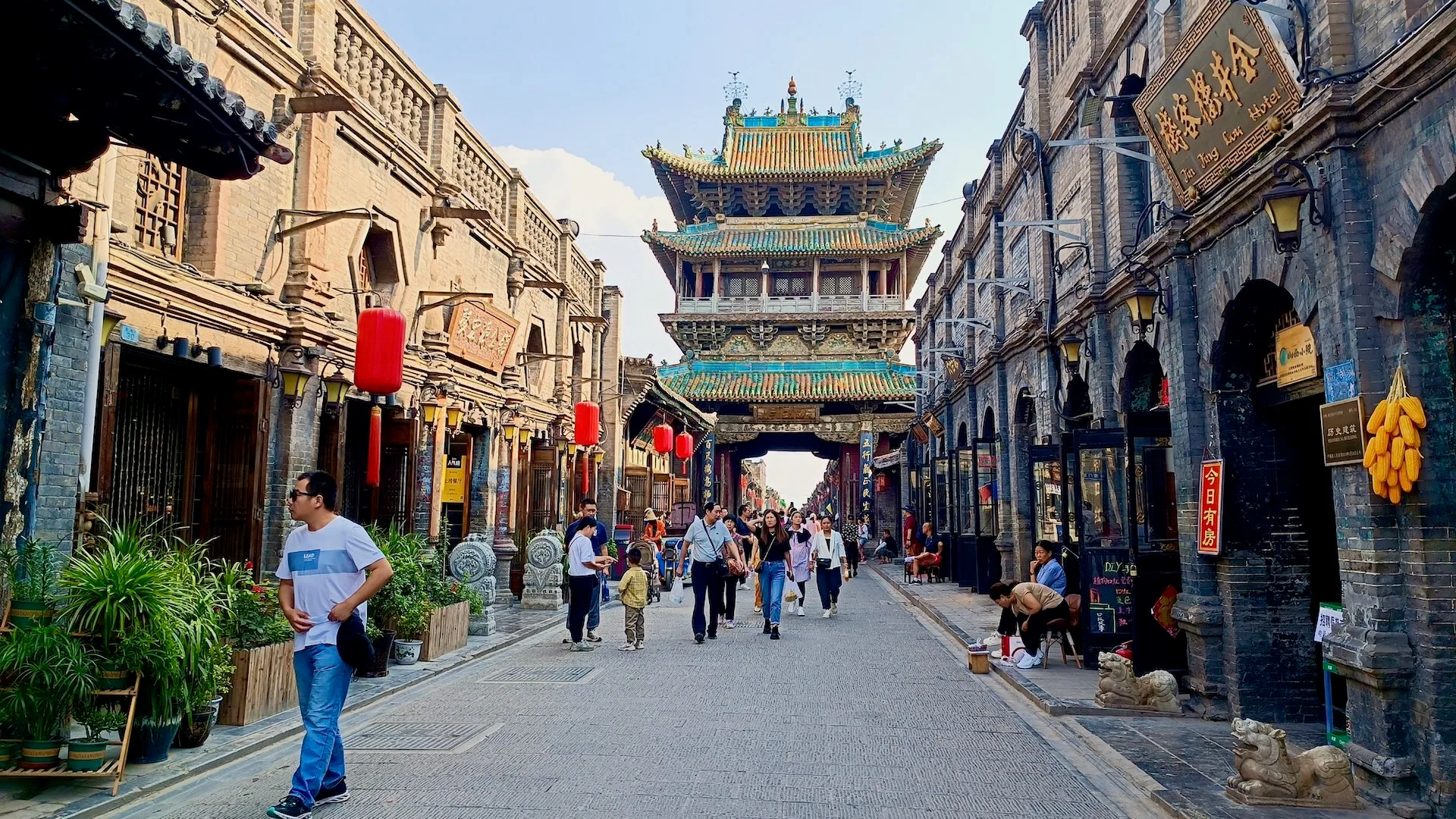
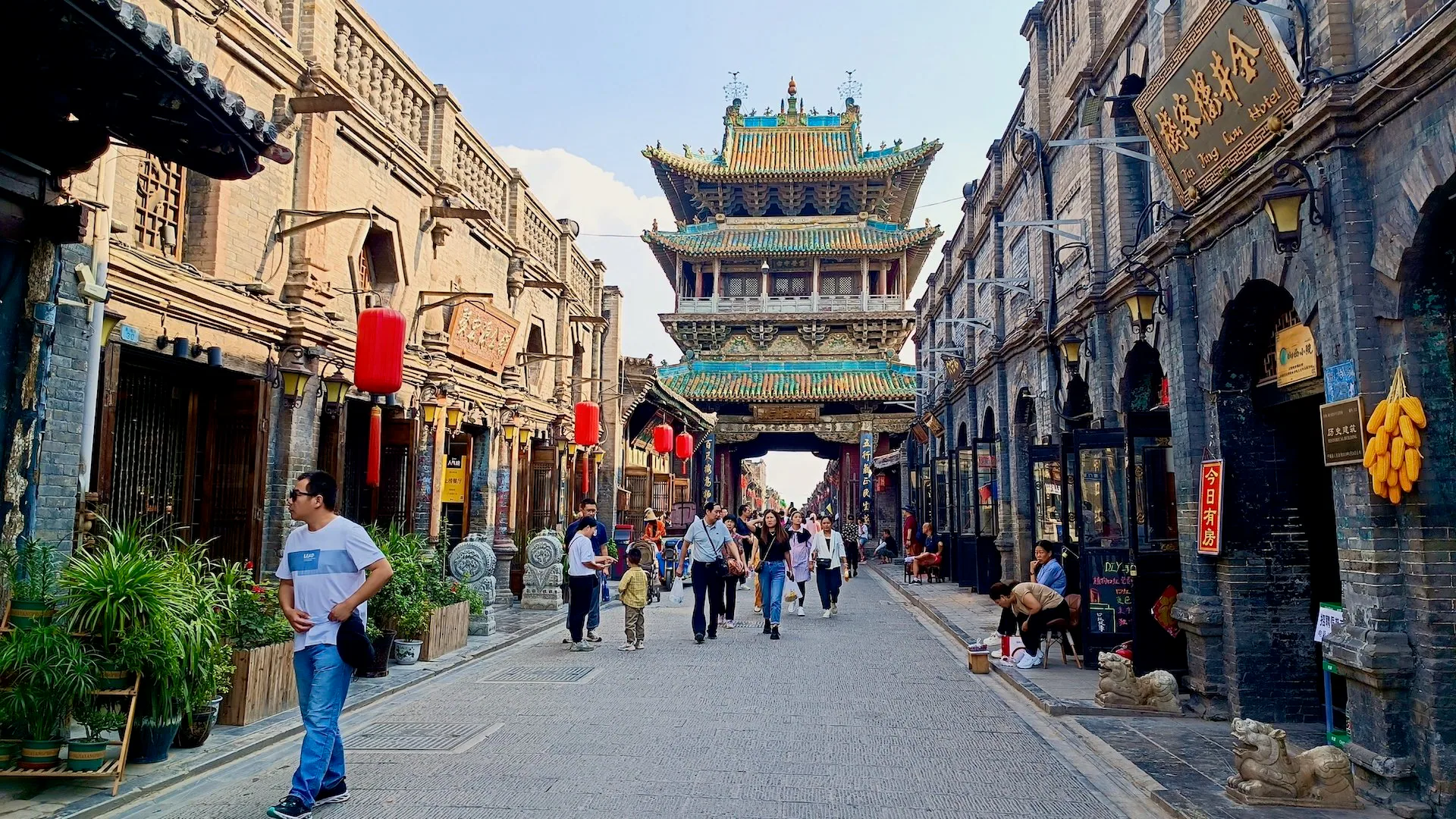
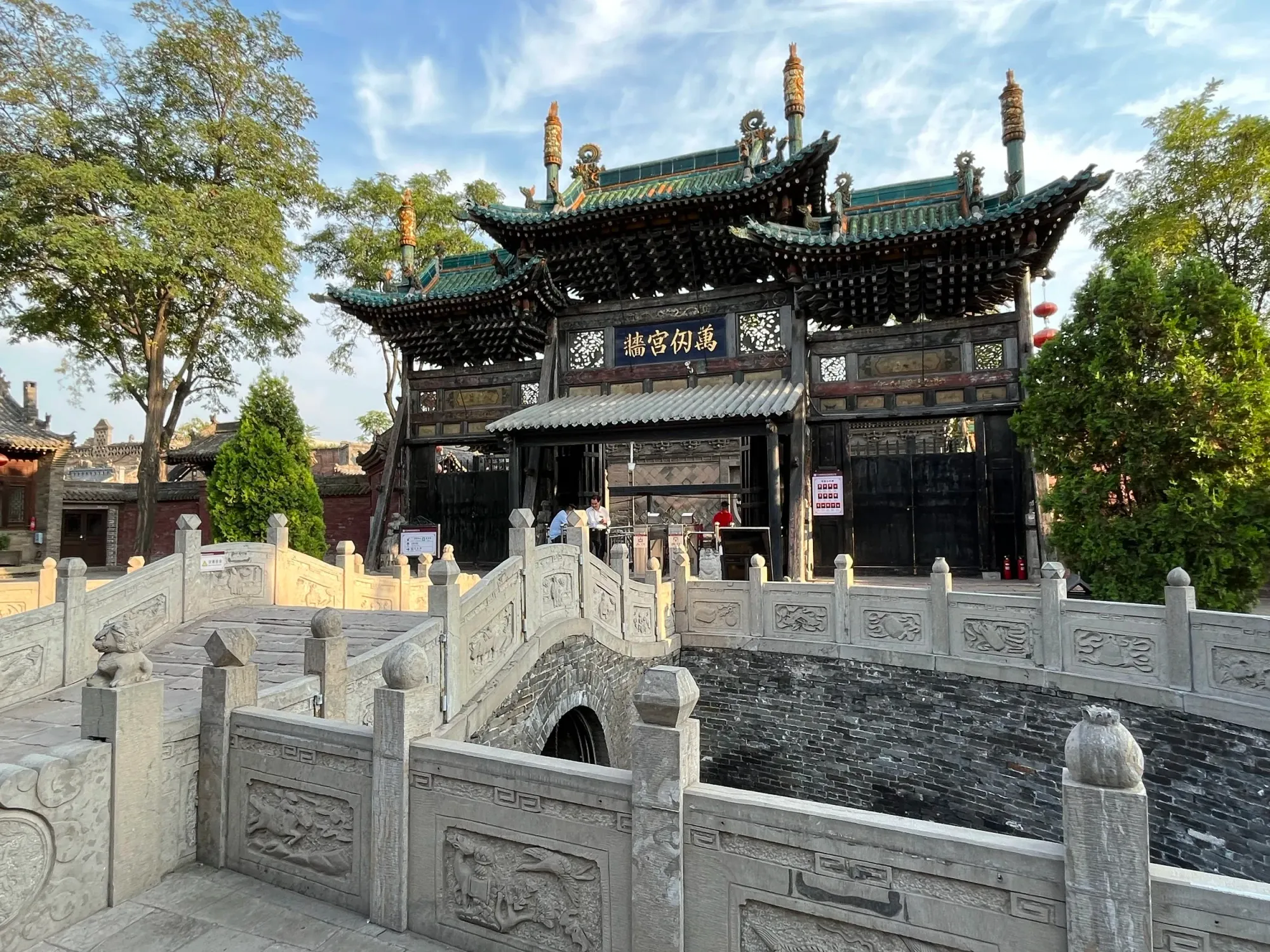
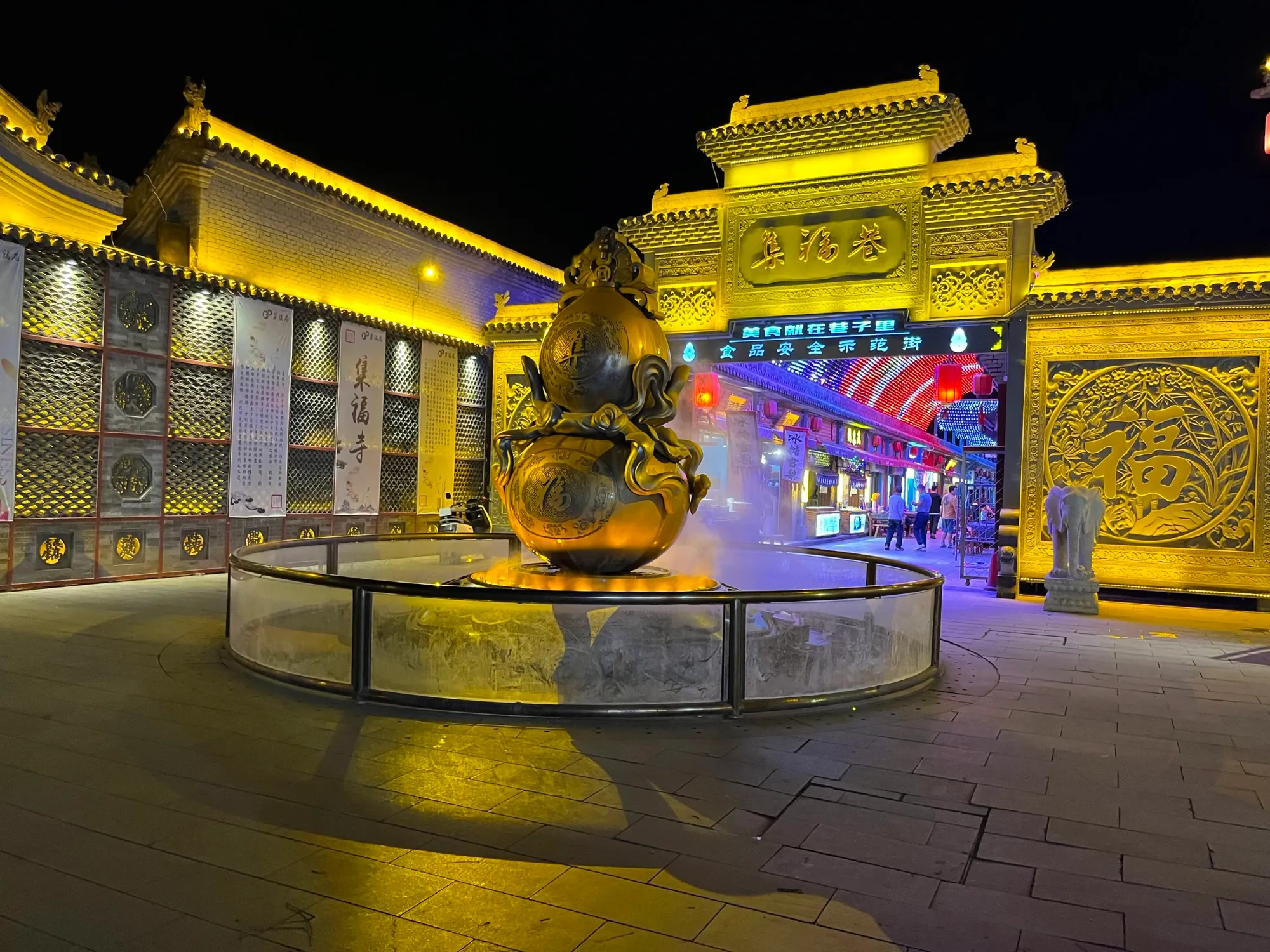
If you are also visiting Pingyao, we recommend booking your hotel there and arranging a day trip to Mianshan. Pingyao offers great accommodation, from traditional lodgings to comfortable high-end hotels, and all the amenities that are sometimes hard to find in remote places like Mianshan.
Pingyao is a well-preserved ancient town and UNESCO World Heritage Site, known for its city wall and traditional architecture. If you are interested in Chinese history and architecture, it is worth combining your trip to Mianshan with at least a day in Pingyao.
If you'd like to stay longer in the scenic area, there are hotels inside, but they cannot be booked in advance: you reserve at the entrance, and availability isn't guaranteed at busy times.
If you prefer to be closer to Mianshan with everything planned ahead, stay in Jiexiu. This small, friendly city is close to the mountain and easily reached by train, with buses and cabs to the mountain and plenty of good, authentic places to eat. Just make sure your hotel accepts foreigners: in less touristy places, some hotels lack the required licence and may turn you away at check-in.
Getting there
In central Shanxi Province, Mianshan is easy to reach from Beijing or Xi'an by high-speed train. The closest stations are Jiexiu and Jiexiu East. Book your tickets at least 2 days in advance, as they often sell out. You can book them online on Trip.com.
From Beijing: about 3h45 to Jiexiu, from 232 CNY in 2nd class to 715 CNY in business class.
From Xi'an: about 3h, between 145 CNY in 2nd class and 424 CNY in business class.
From Pingyao: just 10 minutes to Jiexiu, for 6–10 CNY.
From Jiexiu station, use the Didi app or catch a taxi to the Mianshan scenic area. A hassle-free alternative is one of the many organised trips from Pingyao.
Best time to visit
The best months to visit Mianshan are typically April to October, with the best chance of clear skies and dry paths. Fog may still wrap the mountain, especially in the mornings, but it only adds to the mystical atmosphere.
Travel tips
There are maps at the bus stops along the road, but you won't find any on the trails, so having a map of the scenic area with you is very useful for planning and exploring.
We highly recommend the hop-on hop-off bus ticket (only 50 CNY), which lets you move quickly between different points of the mountain and make the most of your time.
The admission ticket costs 110 CNY in high season (April–October) and 90 CNY the rest of the year.
To book hotels and trains in China from abroad, Trip.com is your best bet: a wide range of options and much more affordable than a traditional travel agency.
Not all foreign cards work in China. With a VISA or Mastercard you can only pay in some hotels and withdraw at Bank of China ATMs. Carry cash at all times or use WeChat to pay.
WeChat is incredibly useful in China: besides paying and chatting with new Chinese friends, you can use it for translations, ordering a cab and much more.
Travelling to the other side of the globe, it is always a good idea to get insurance. Good options for China are Insubuy or VisitorsCoverage.
Good internet access is crucial, but can be a headache in China. Universal physical SIM cards like DrimSim are an option. An incredibly convenient alternative is Airalo, an eSIM service you can top up as needed. It is also connected to a VPN, which is highly recommended in China, as most non-Chinese websites are unavailable.
Is it worth visiting?
Mianshan offers a diverse range of attractions for travellers seeking adventure, cultural immersion and natural beauty.
With its mix of enjoyable and moderately challenging trails, stunning landscapes, meticulously preserved architecture and captivating religious buildings, it is a fulfilling experience. We highly suggest adding it to your itinerary, particularly if you plan to visit Xi'an or Pingyao.