- Discovered
- 1964
- Visitable length
- 350 m
- Temperature
- 16–18 °C all year
- Guided tour
- About 45 minutes
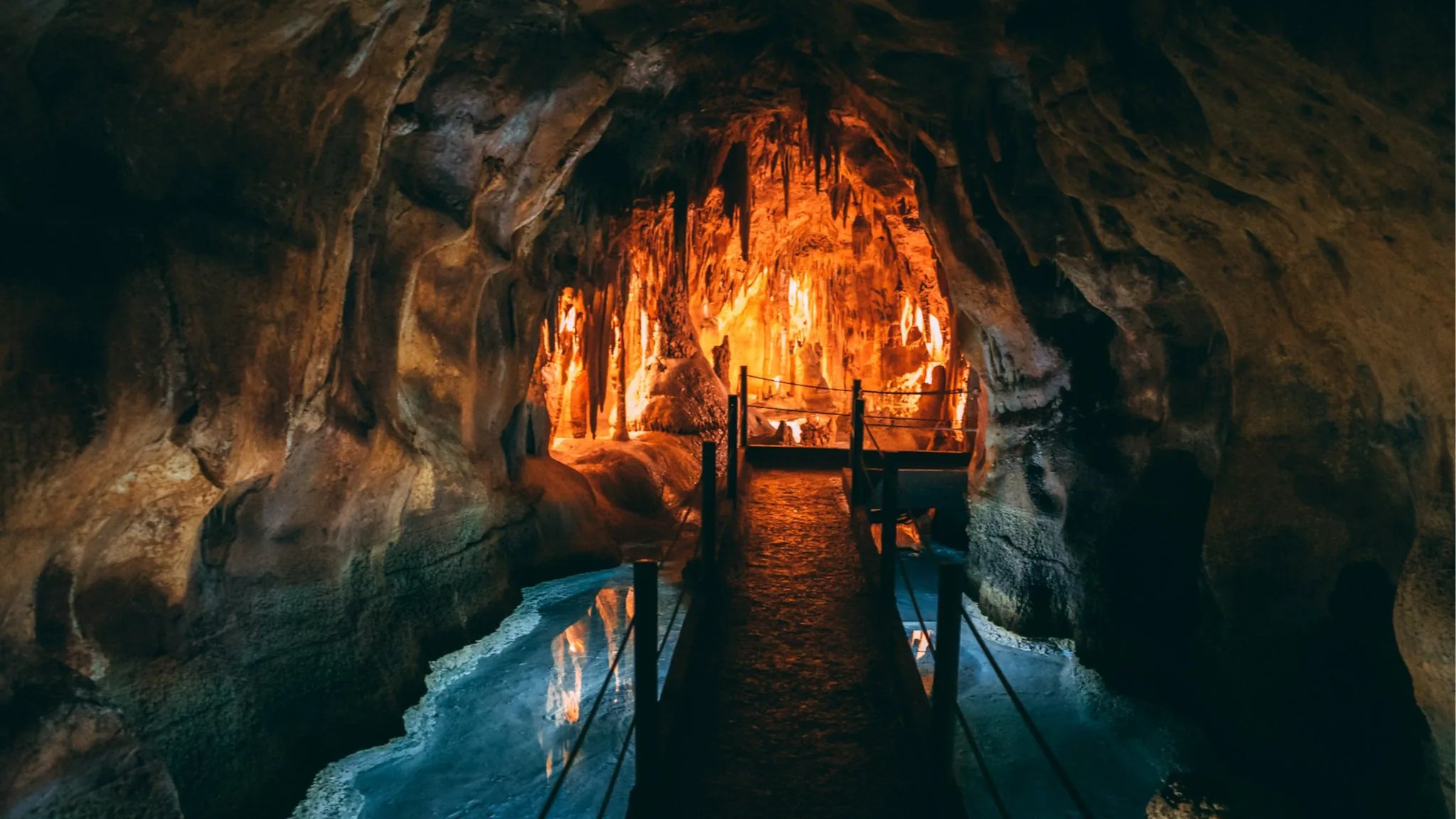
Hidden beneath the rolling hills of central Portugal lie the Alvados Caves (known as Grutas de Alvados in Portuguese), a system of ancient limestone caves: a subterranean wonderland filled with stunning rock formations, crystal-clear underground lakes, and breathtaking stalactites and stalagmites.
Whether you're a nature enthusiast or simply seeking a one-of-a-kind adventure, the Grutas de Alvados are a must-see destination that will leave you awestruck and inspired.
“The feeling one gets is one of admiration for the work executed by nature over more than 50,000 years.”
The old cave and the new cave
The Alvados Caves consist of two parts, traditionally known as the "old cave" and the "new cave". The old cave has been known for about four hundred years and was often used by local shepherds as shelter from the weather.
The new caves, which make up the Alvados Caves themselves, were discovered in 1964 by a group of quarry workers from the Serra dos Candeeiros. The discovery happened by chance, when the workers heard stones falling into a chasm that seemed deep from the start.
A first descent into the caves was prepared with ropes and lanterns. Dazzled by what they found, the news of the discovery quickly spread. In the following two years, tunnels were opened and stairs were built to allow easier exploration of the cave.
What to see
 STOP 1
Inside the caves
The Alvados Caves have a visitable length of 350 metres. Natural ventilation keeps a stable temperature between 16 and 18 °C throughout the year.
The feeling one gets is one of admiration for the work executed by nature over more than 50,000 years, and the interior route is served by indirect lighting that enhances the natural colours and transparencies of the limestone formations.
The caves are open all year round, and their location lets you explore the rich gastronomic heritage of the region. They are one of the most delicate natural spaces open to tourism and one of the most characteristic caves in the Iberian Peninsula.
 STOP 2
The guided tour
Visitors can take a guided tour of the caves, which lasts approximately 45 minutes. During the tour you explore the various chambers and galleries, learning about their formation and the geological history of the area.
The Alvados Caves are very close to the Santo António Caves and are located in the Serras de Aire e Candeeiros Natural Park, part of the limestone massif of Estremadura and integrated into a circuit of great historical and scientific value in central Portugal.
The interior is formed by a succession of rooms and small uneven lakes with natural access from the outside. A first group of three uneven rooms unfolds in the form of a natural tunnel, revealing several of the monumental "algares" (chasms) characteristic of this region.
 STOP 3
The bats
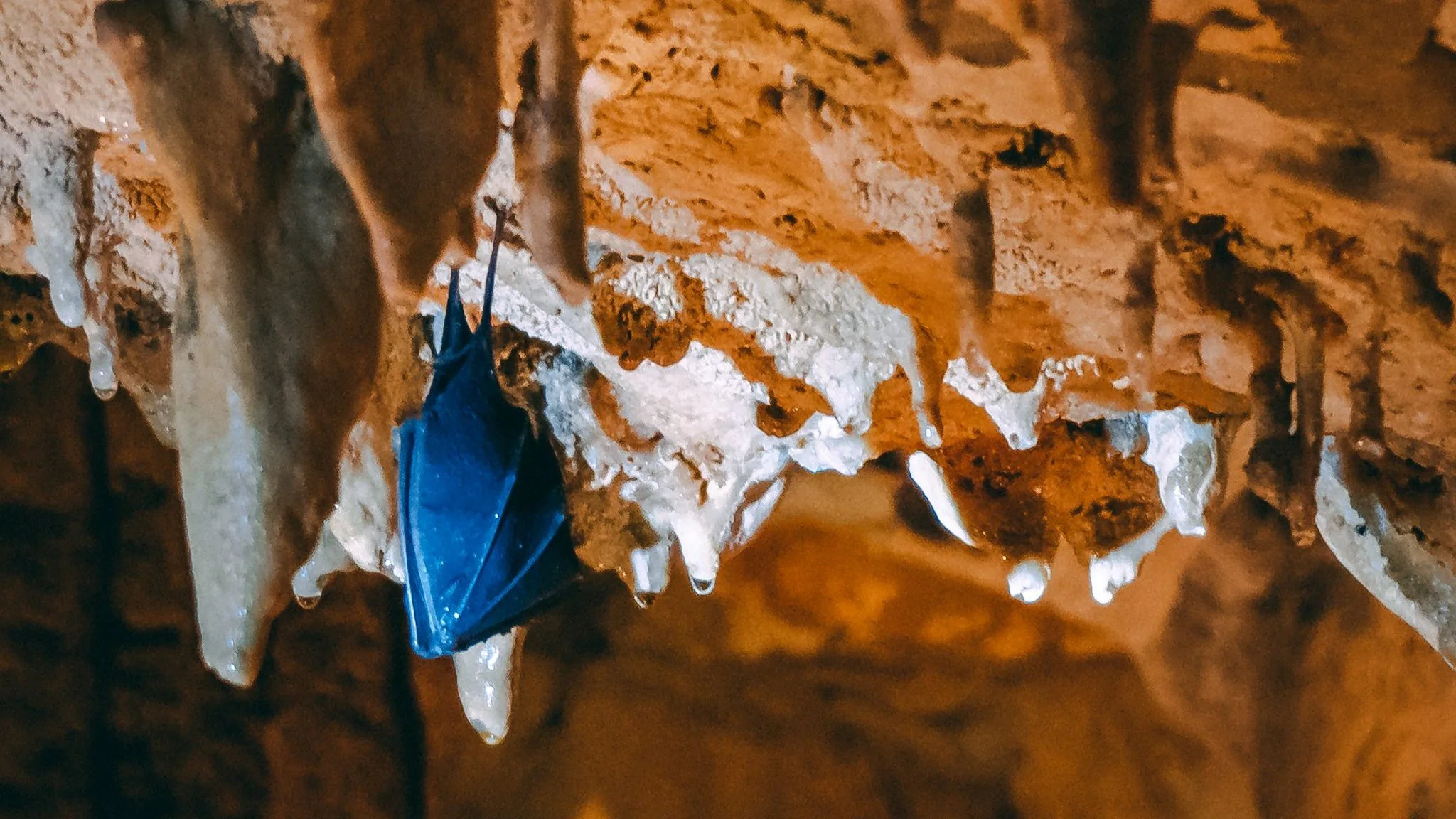
The area surrounding the Alvados Caves, in the Serras de Aire e Candeeiros Natural Park, is home to 18 species of bats.
Bats play a crucial role in the ecosystem as pollinators, seed dispersers and insect controllers. They are nocturnal and navigate using echolocation, emitting high-frequency sounds that bounce off objects and help them detect prey and find their way in the dark.
Within the cave systems, bats can often be found roosting in large numbers, hanging from the ceilings or clinging to walls. The caves provide them with shelter from predators and harsh weather.
Their presence contributes to the biodiversity and ecological balance of the region. However, disturbances to their habitats, such as excessive noise, light pollution or human interference, can disrupt their natural behaviours and harm their populations. Conservation efforts that protect bat habitats and raise awareness of their importance are crucial for the survival of these fascinating creatures in the Alvados Caves and surrounding areas.
 STOP 4
The Cathedral
One of the highlights of the Grutas de Alvados is the Cathedral, a large chamber that is home to some of the most impressive rock formations in the caves.
The linear path through the first three rooms unexpectedly leads to a large central room that unfolds into successive rooms and small natural lakes, where the harmony of the numerous stalactites and stalagmites is highlighted by lighting designed to preserve their natural beauty.
What to see nearby
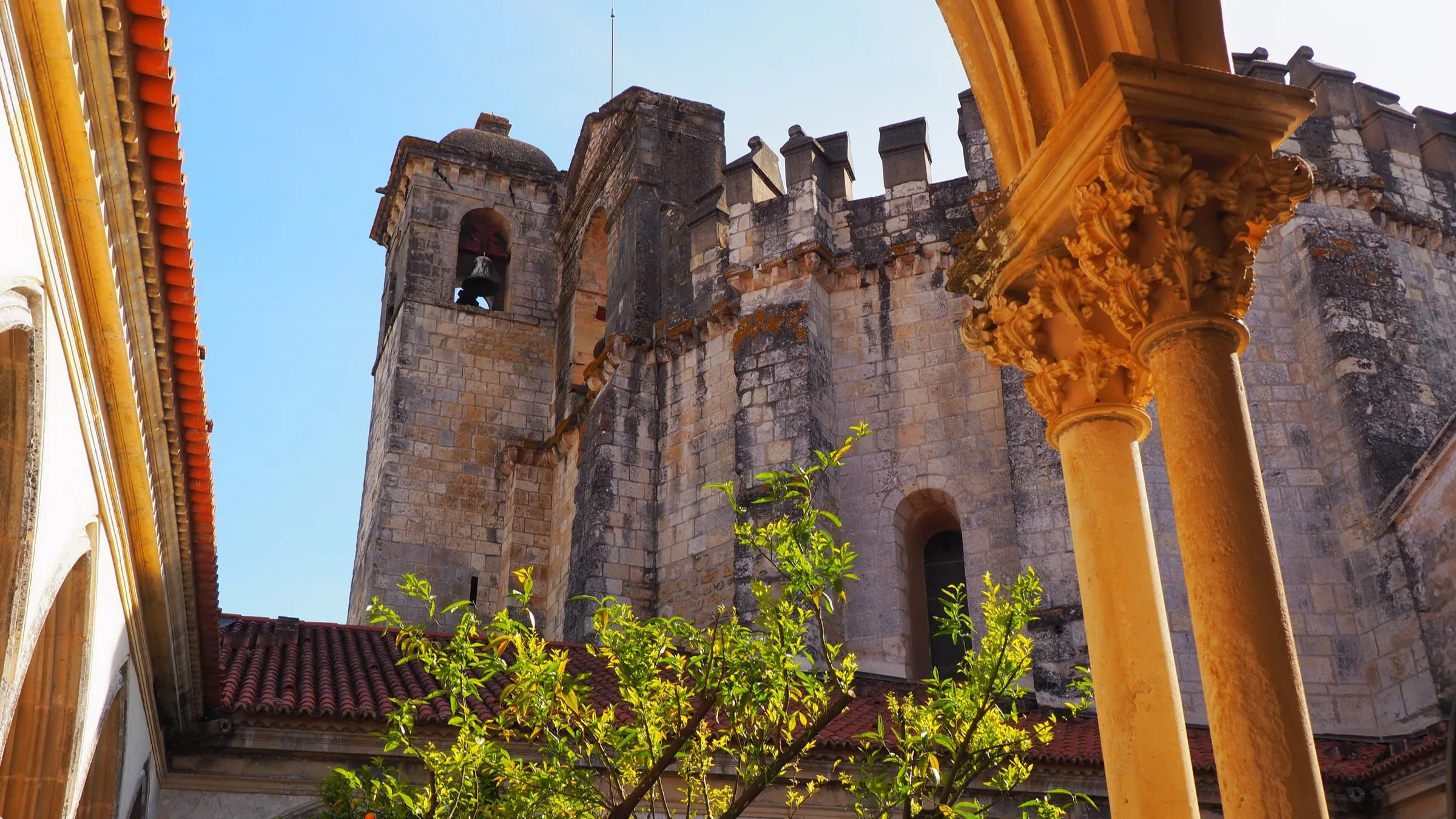
Within a 50 km radius there are several destinations, such as the castles of Leiria, Óbidos, Porto de Mós, Santarém, Torres Novas, Almourol and Ourém. Besides the Monastery of Batalha and the convents of Alcobaça and Tomar, the Sanctuary of Fátima stands out as a religious site of worldwide importance.
Is it worth visiting?
The Alvados Caves form one of the most beautiful and remarkable sets of natural caves open to the public in Portugal, which alone justifies a visit to this stunning and delicate natural scenery.
With their natural beauty and unique underground setting, the Alvados Caves are a must-see for anyone visiting the Alcobaça or Leiria region.