- From Bandung
- About 40 min by car
- Water
- 30–45 °C
- Open
- Daily, 7 am–6 pm
- Entry
- 10,000–20,000 IDR
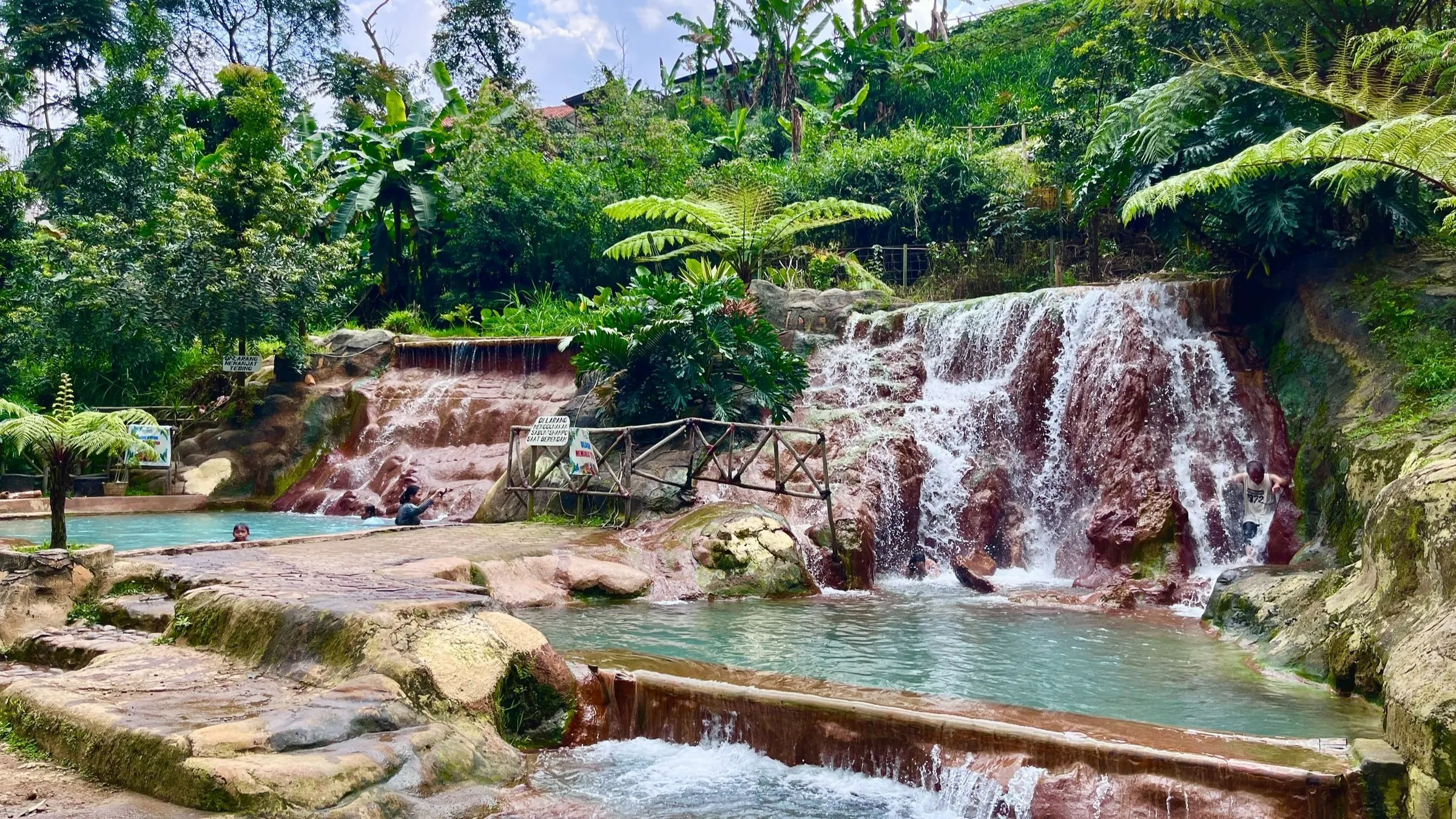
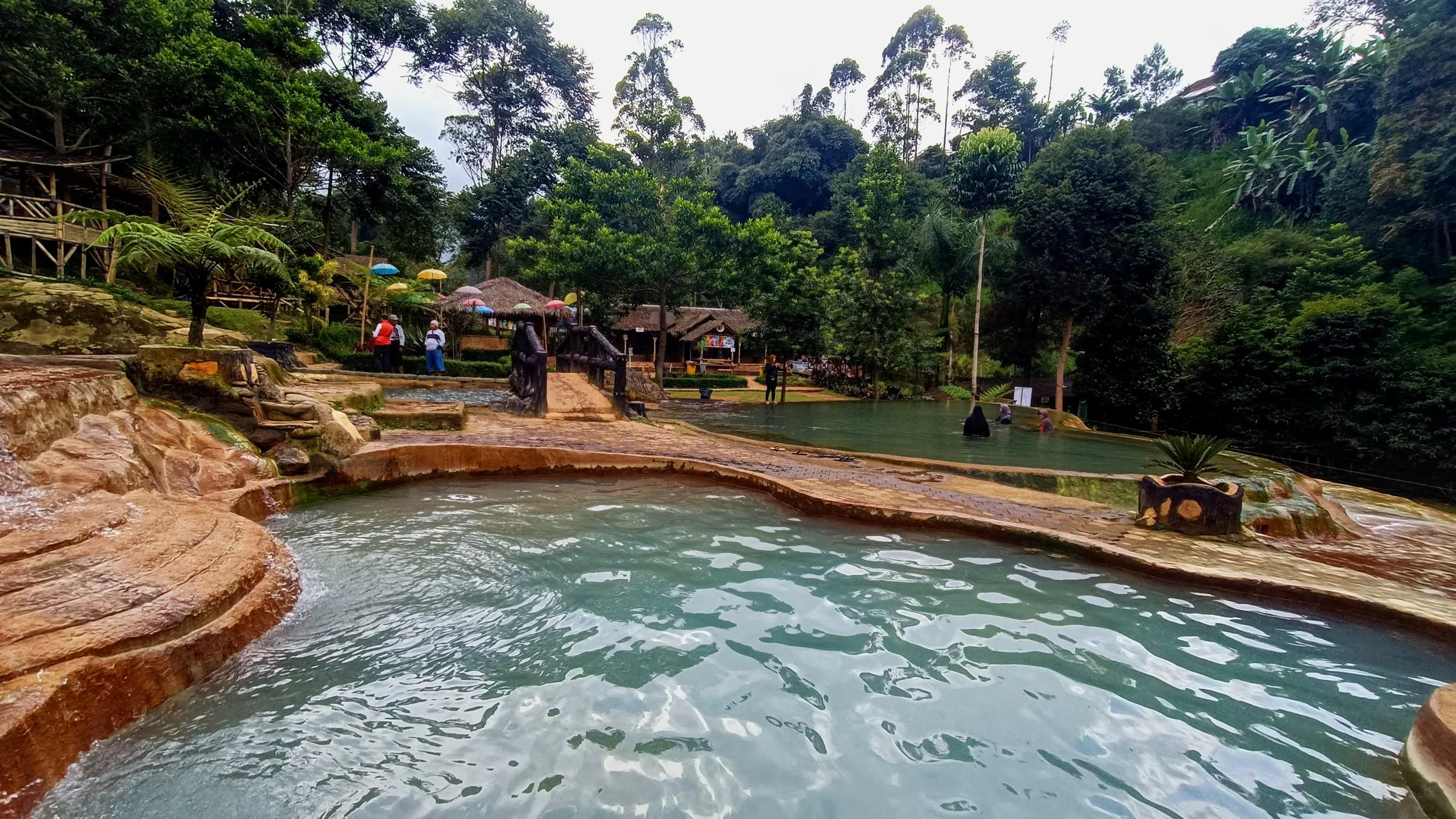
Located on the outskirts of Lembang, Curug Cipanas Nagrak Hot Spring is a natural spring and waterfall that offers visitors a relaxing soak in warm, mineral-rich water. The pools are surrounded by natural rock formations and lush greenery, providing an ideal setting for relaxation.
You can unwind in the pools and take in the breathtaking natural scenery, with all the essential amenities that make it an experience everyone can enjoy.
“Wooden plaques marked the way without English translations, a sign that this place is still frequented mainly by locals.”
What to see
 STOP 1
Selamat Datang
After being dropped off at an unassuming car park along the roadside, we made our way down a narrow path cutting through the forest. Wooden plaques marked the way, inscribed in Sundanese without English translations, a sign that this place is still frequented mainly by locals rather than international tourists.
At the end of this brief trail, visitors are greeted by a ticket office and a welcome sign perched above the azure waters below.
 STOP 2
The hot spring
The Curug Cipanas hot spring is renowned for its therapeutic effects, attributed to its rich mineral composition, notably sulphur, calcium and magnesium. You can immerse yourself in several pools with temperatures ranging from comfortably warm to invigoratingly hot.
These geothermally heated pools keep a natural temperature of 30 to 45 °C (86 to 113 °F). Those closer to the waterfall are the warmest, while the larger pools further away are milder, ideal for a leisurely swim.
 STOP 3
The amenities
Surrounding the pools are numerous elevated, covered bamboo cabins, an ideal place to unwind with your family and recharge between swims. They offer protection from the light rain that is common in this mountainous region, so you can enjoy the spot whatever the weather.
Nearby, charming outdoor cafés serve delicious Sundanese snacks and refreshing drinks. Essential facilities such as shower cabins and toilets are also available on site for a small fee. The well-maintained amenities and easy access make Curug Cipanas a perfect destination for families seeking a fun and tranquil day in nature.
Where to stay
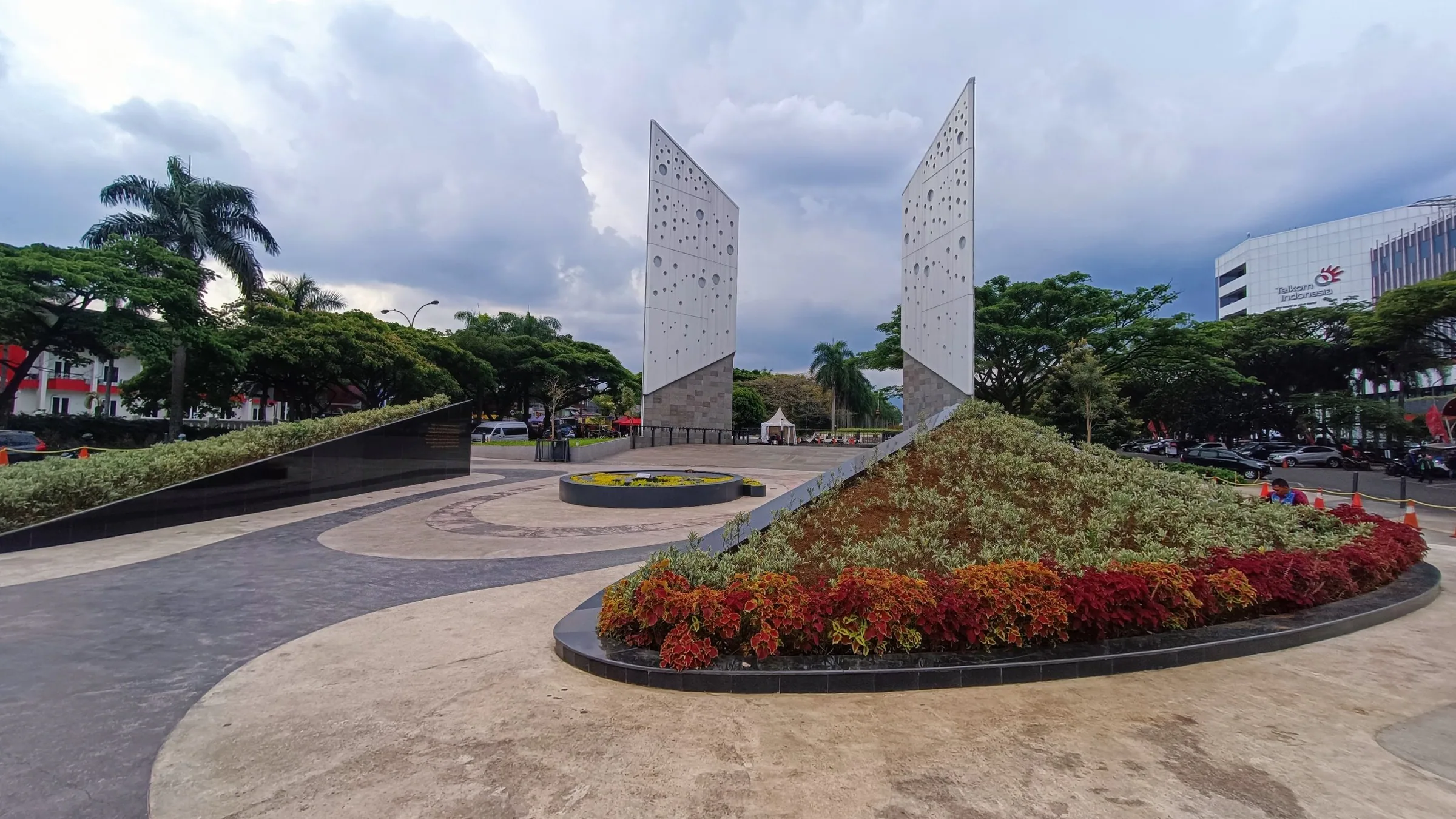
Curug Cipanas is located on the outskirts of Lembang, a small, scenic city with many waterfalls, forest parks and the famous Lembang Floating Market. Since it is a small city, though, there is not much variety in accommodation, and transport is harder to find.
Just a 40-minute drive from Lembang lies the enchanting city of Bandung, the capital of West Java. Often called the "Paris of Java", Bandung is a lively metropolis with about 2.5 million inhabitants in the city and over 8 million in greater Bandung. It has excellent train connections, a thriving café culture, diverse dining options and shopping to suit every budget. Encircled by stunning natural landscapes, Bandung is also a gateway to scenic wonders like Kawah Putih Crater Lake, Kawah Rengganis and the serene Ciwidey tea plantations.
More importantly, Bandung offers a wide range of accommodation, from luxury hotels to cosy guesthouses, ensuring a comfortable stay for every traveller.
Getting there
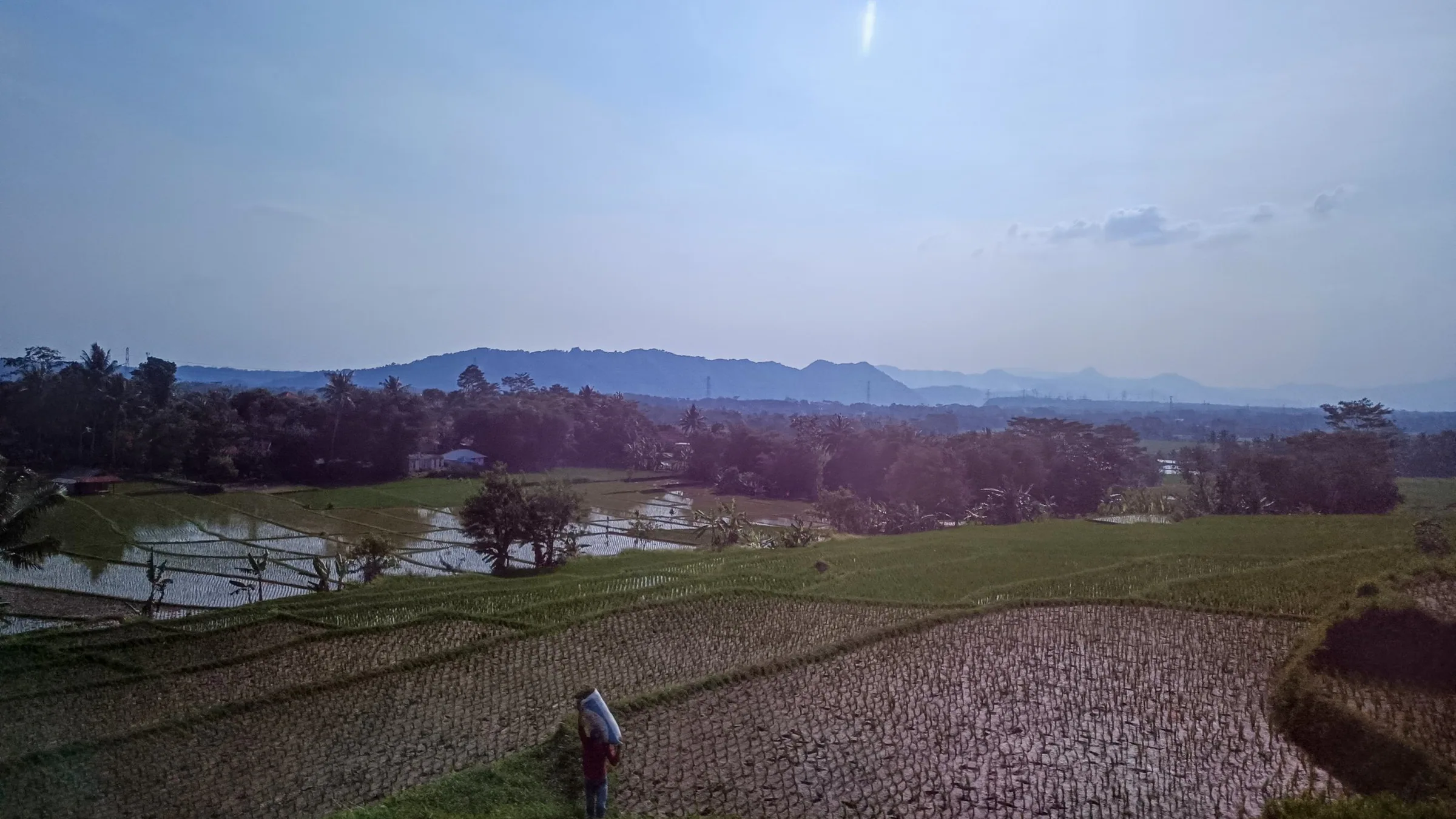
The most convenient way to reach Curug Cipanas is from Bandung. International flights to the area now use Kertajati (West Java International Airport), about 1.5–2 hours away, but most international visitors fly into Jakarta. The city is well connected by rail to all the major cities in Java. The train from Jakarta to Bandung runs daily from Gambir station. Since October 2023 there is also the Whoosh high-speed train, from Jakarta Halim to Bandung Padalarang or Tegalluar, in about 45 minutes.
The journey typically takes around 2 hours and 45 minutes, with tickets ranging from 150,000 IDR in economy class to 510,000 IDR in luxury class. On board you can enjoy modern, comfortable amenities, including delicious and reasonably priced Indonesian meals at the bar. The route offers picturesque views of the mountains and lush rice fields. For seamless travel, consider booking your train tickets in advance through the Traveloka app.
Once in Bandung, the Grab taxi app is a convenient and cost-effective way to reach the hot spring. The ride from Bandung typically takes around 40 minutes. Plan your return journey ahead of time, as getting a Grab back to Bandung late in the day can be difficult due to limited availability.
Renting a scooter may seem like a viable alternative, but we do not advise it. Java is famous for its chaotic traffic: the roads are packed with motorcycles, and many rules (priorities, zebra crossings, etc.) seem to be simply overlooked by the locals, which can be daunting for unfamiliar riders. A local driver who knows the traffic can offer a safer and more enjoyable experience.
Best time to visit
West Java has a tropical climate, with high humidity and temperatures averaging 24 °C over the year. The Bandung region, being mountainous, is usually milder, averaging 20 °C all year round. There are only two seasons: the dry season, from May to September, and the wet season, from October to March. April is a transition month.
Visiting during the dry season increases your chances of clear skies and sunny weather, so you can fully enjoy a day soaking in the thermal waters, amid the lush greenery and the calming sound of the waterfall. The waterfall can still be visited during the wet season, but heavy rainfall can bring higher water levels and stronger currents, which can affect access and safety.
Hours, fees and tips
The hot spring is open daily from 7 am to 6 pm.
The entrance fee is typically between 10,000 and 20,000 IDR.
Most of Java's residents follow moderate Islamic practices, so wearing a swimsuit in the pools is generally accepted and not seen as disrespectful. Still, be mindful of local customs and avoid overly revealing attire, as many Indonesians prefer to swim fully clothed.